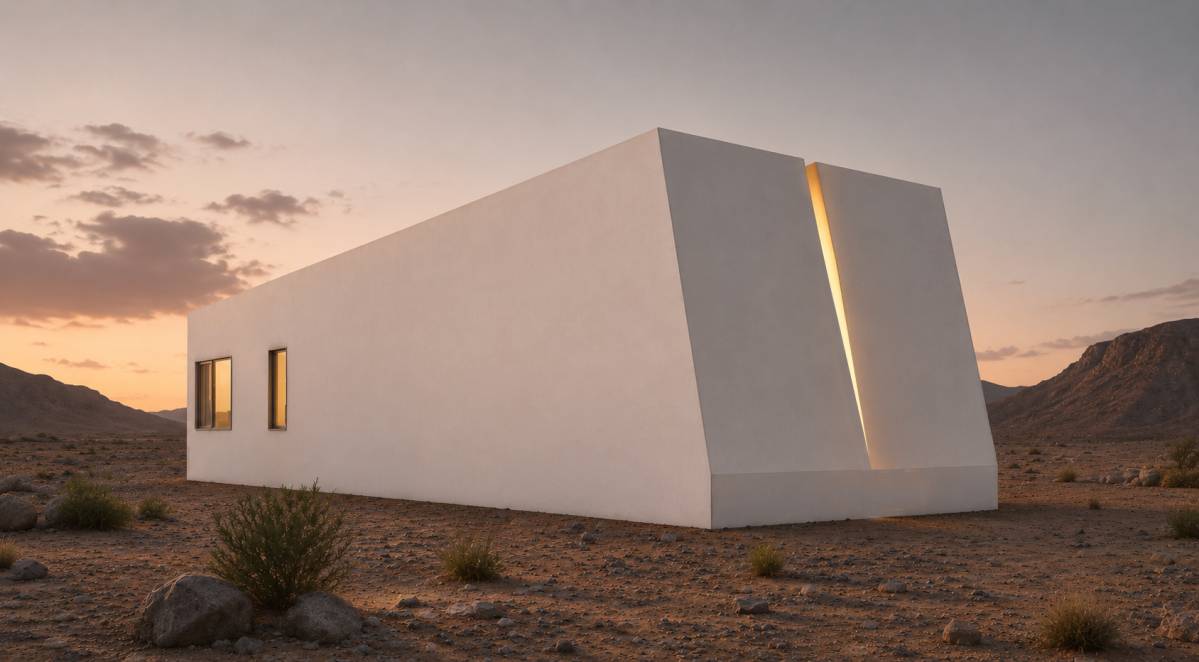
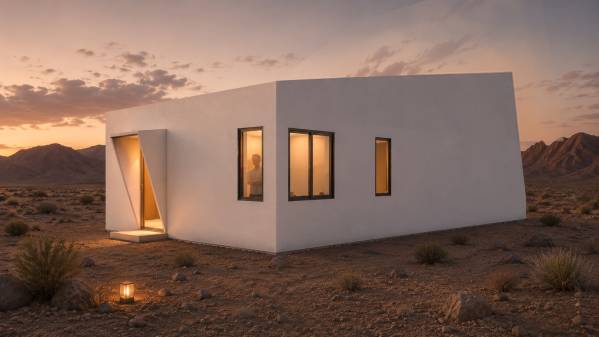
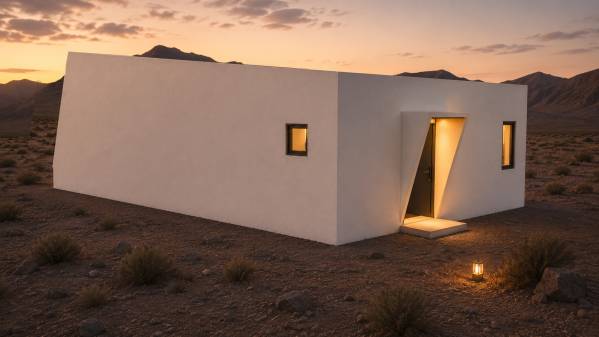
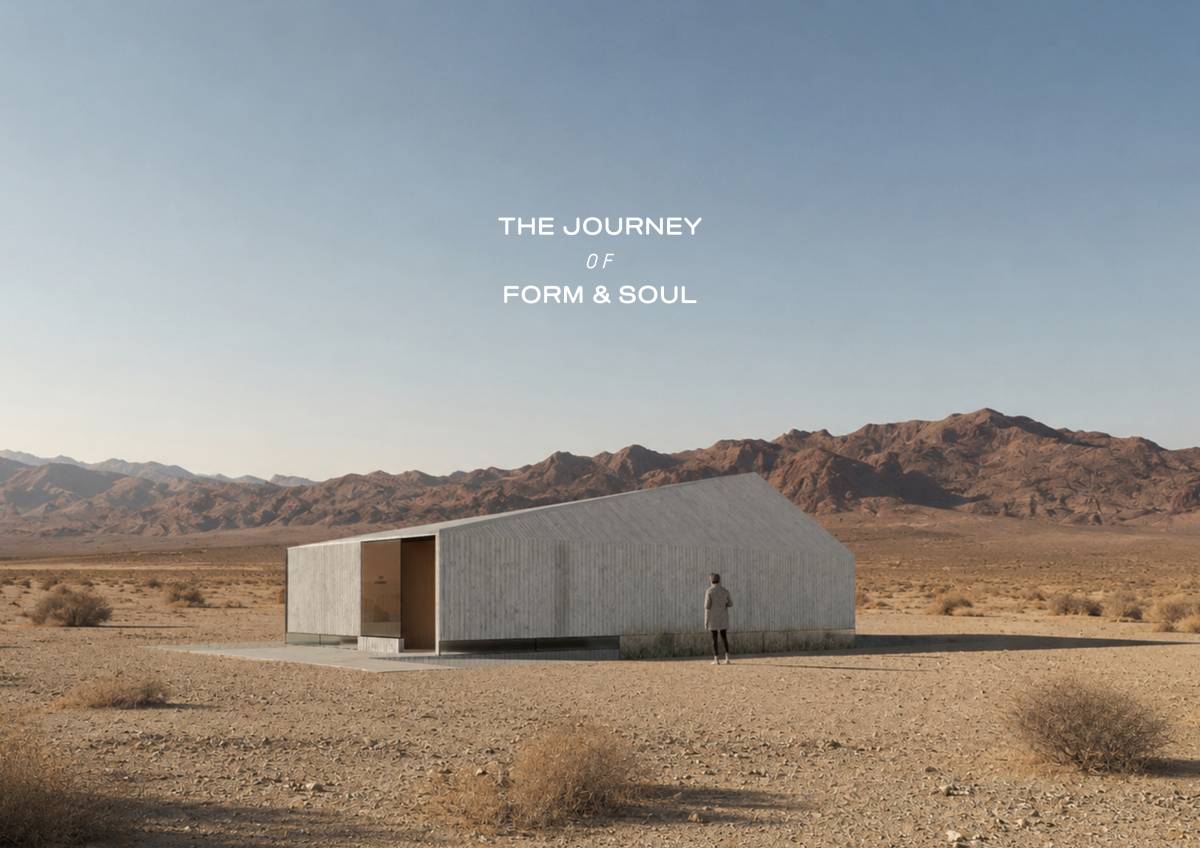
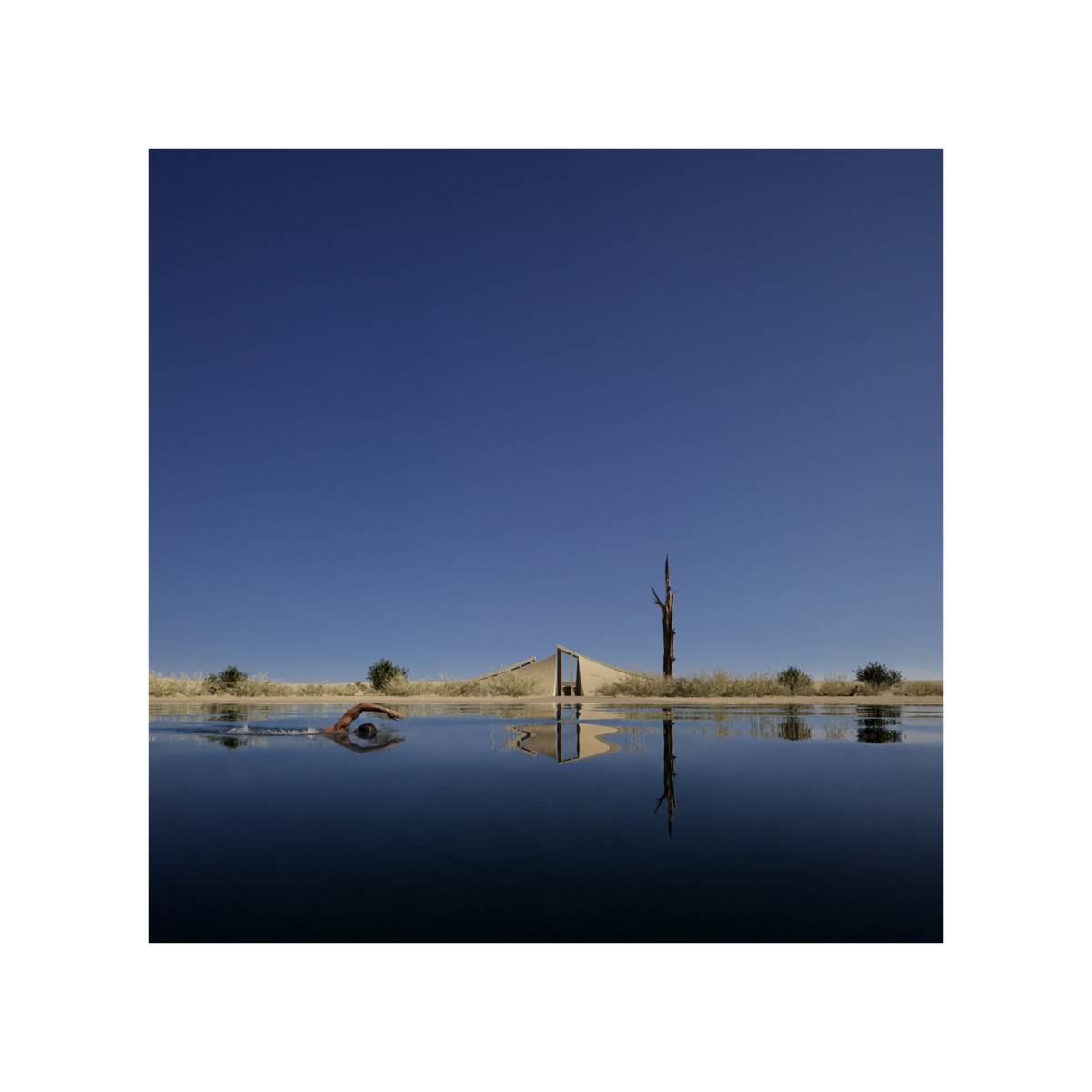
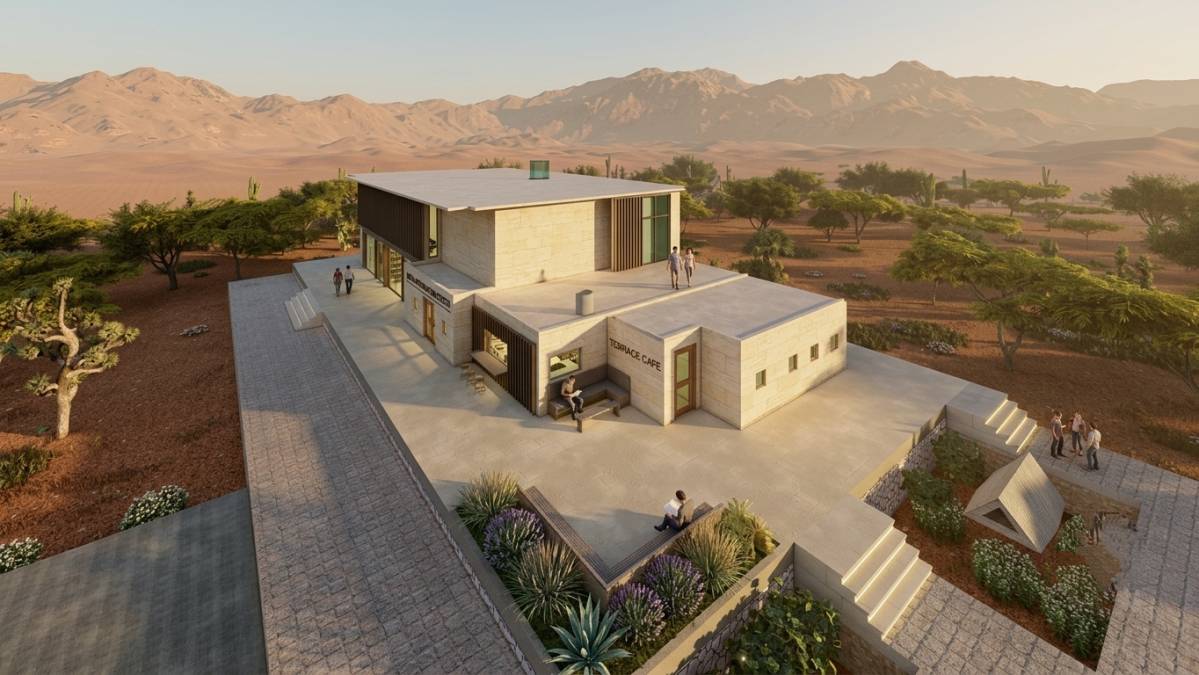
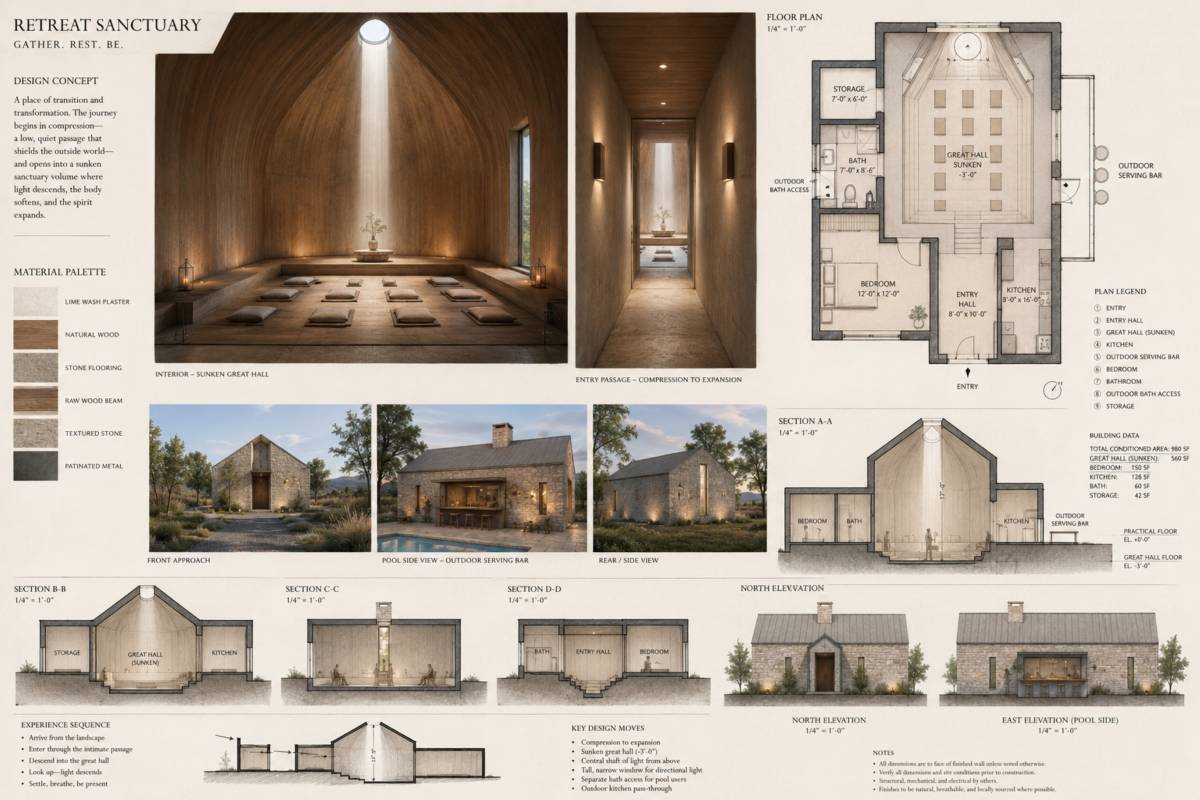
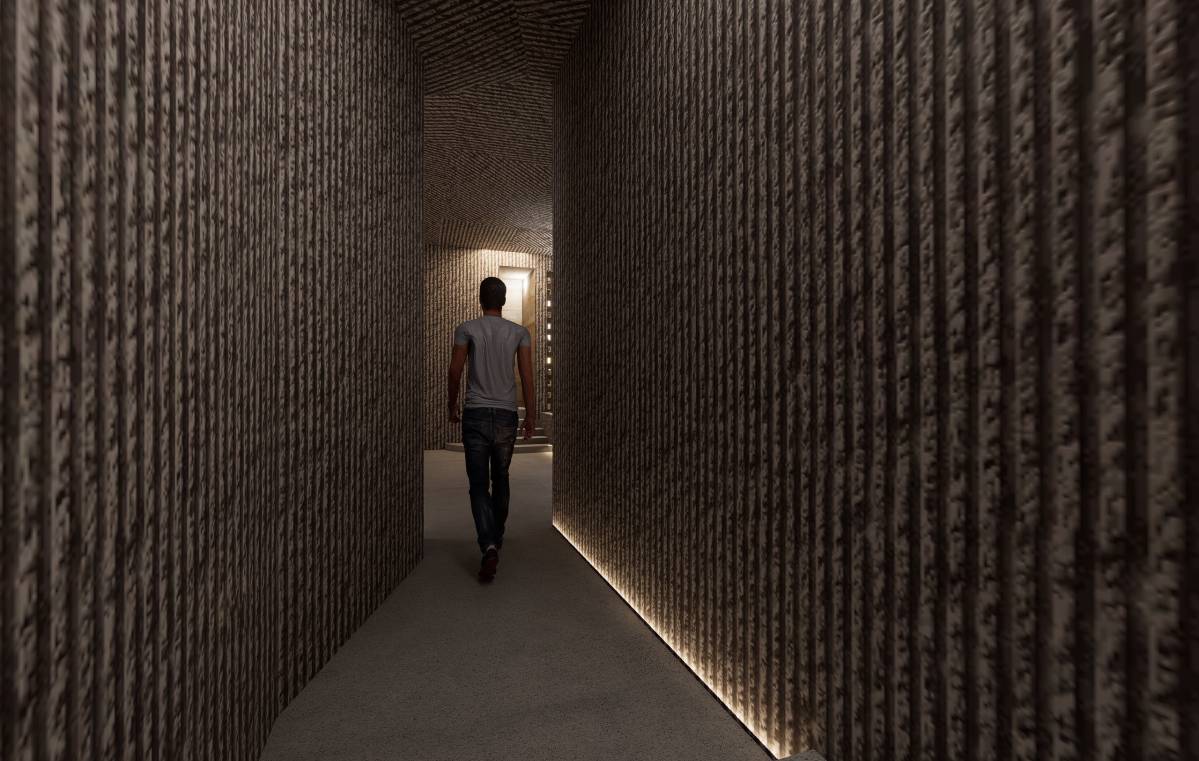
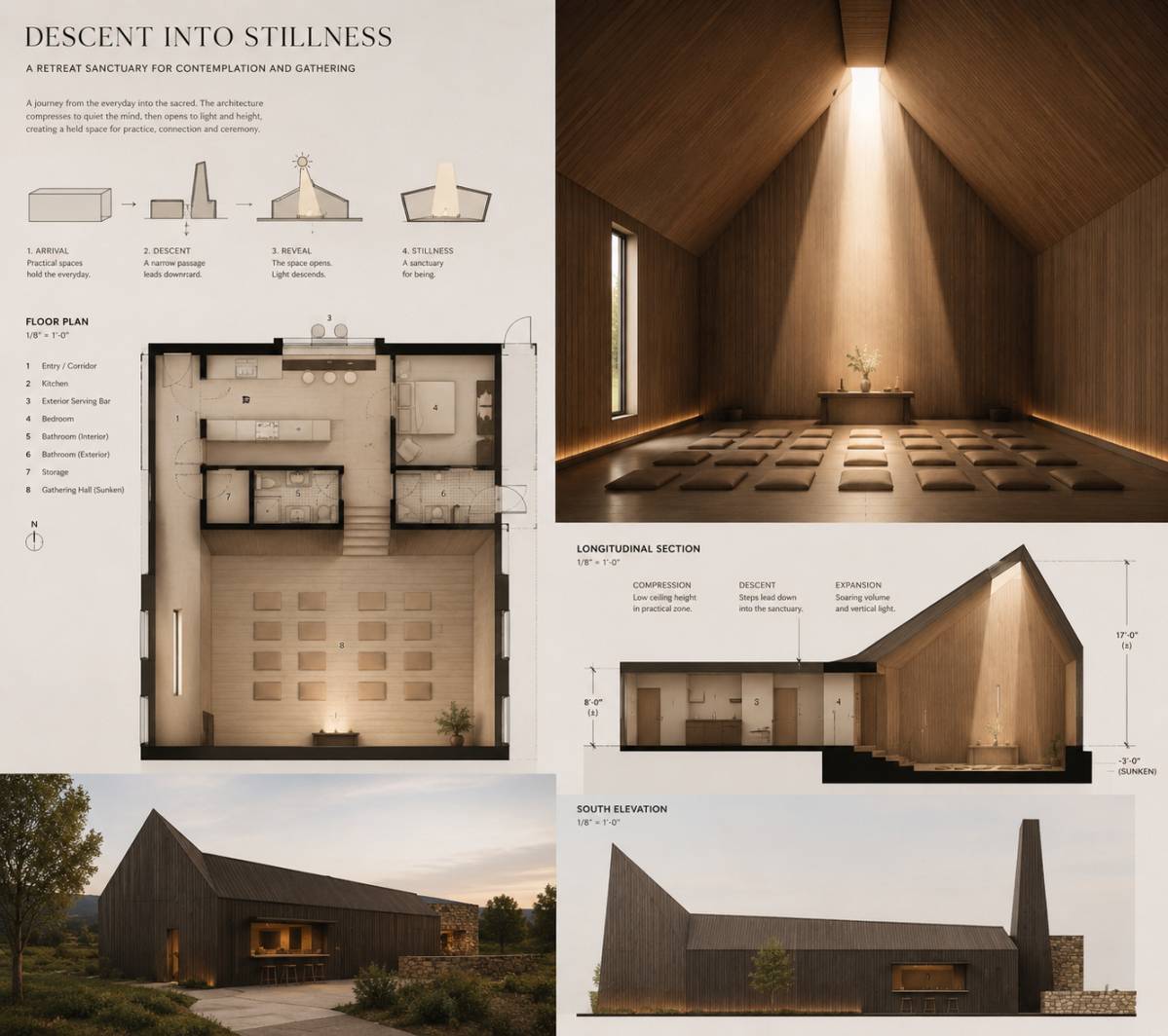
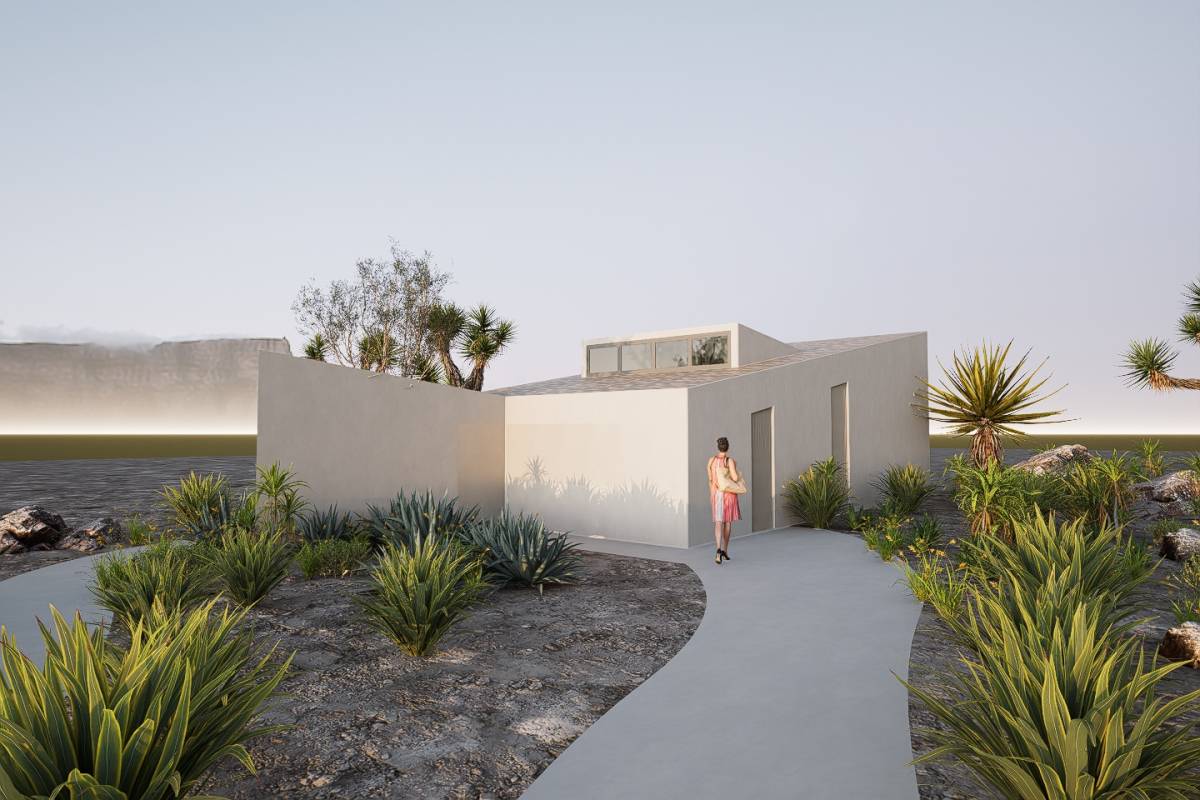
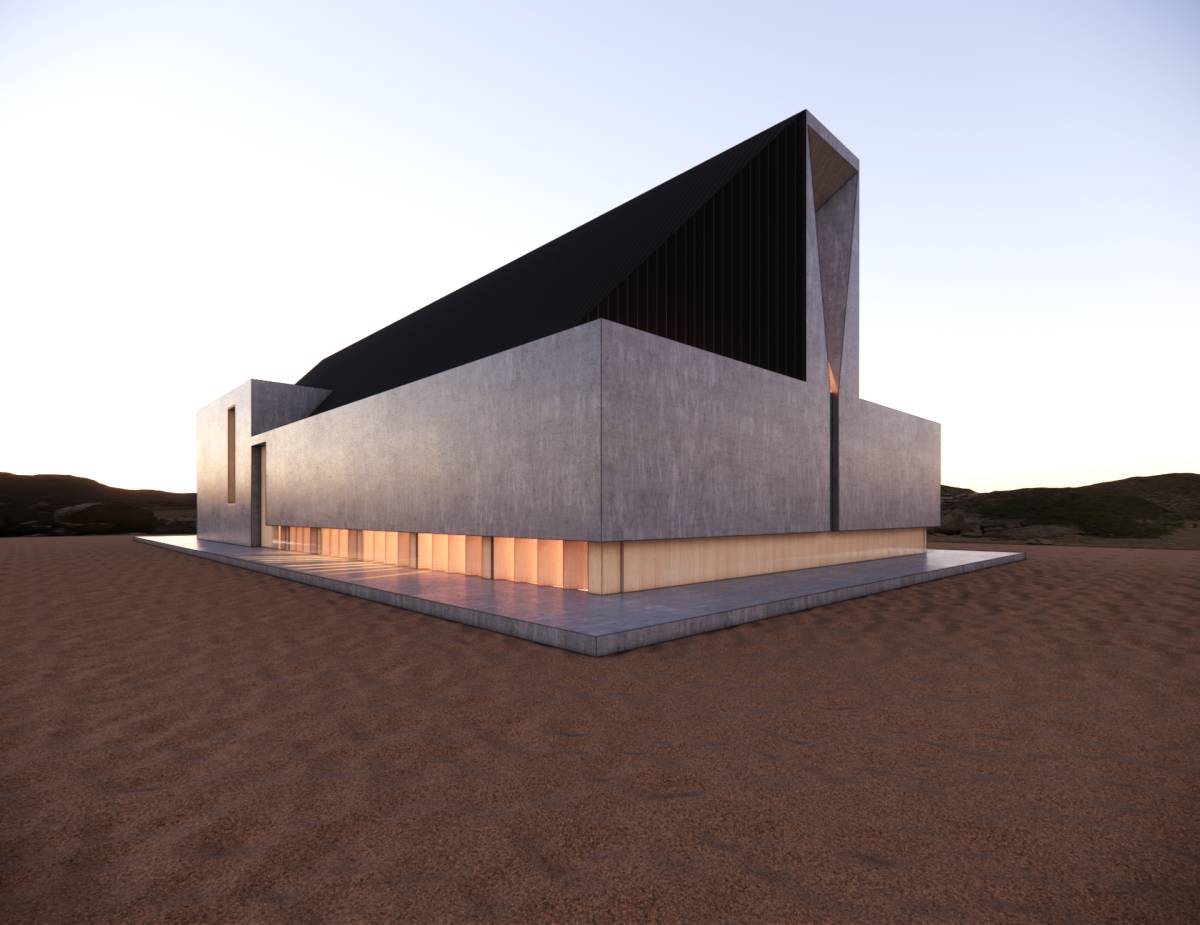
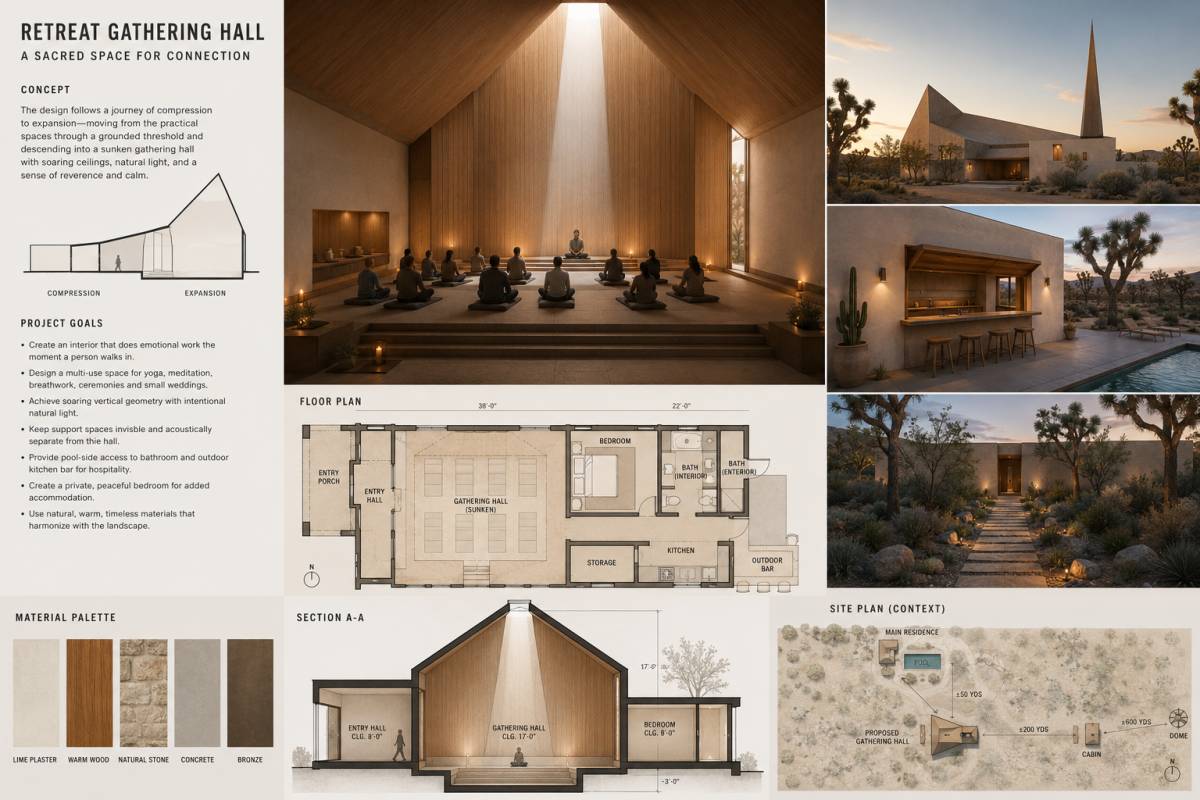
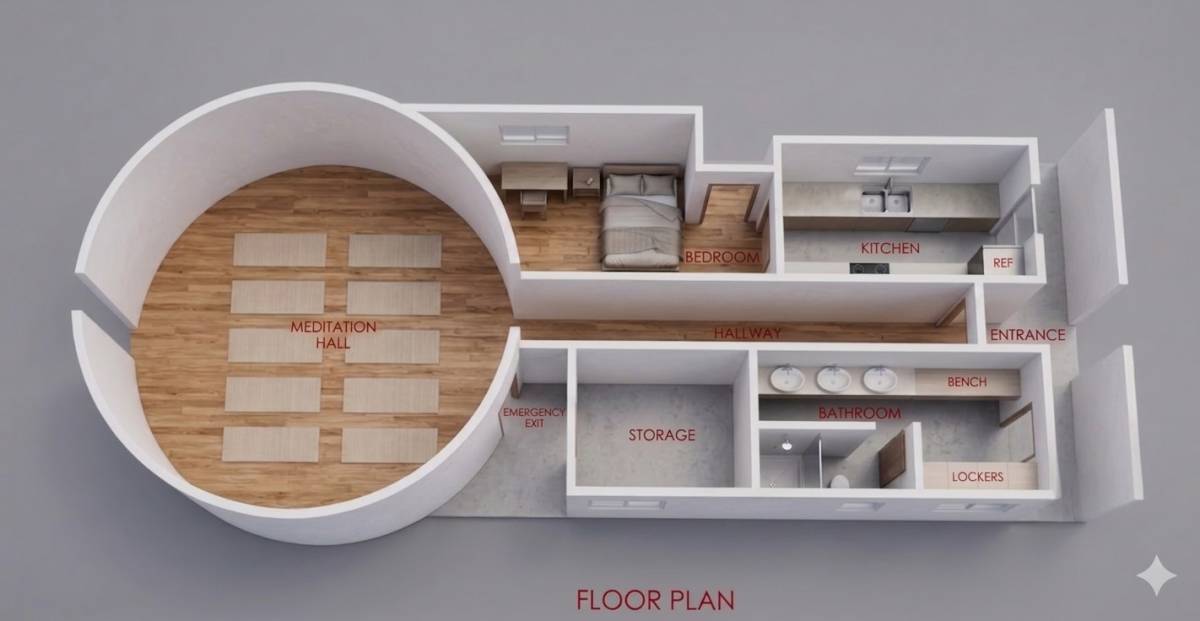
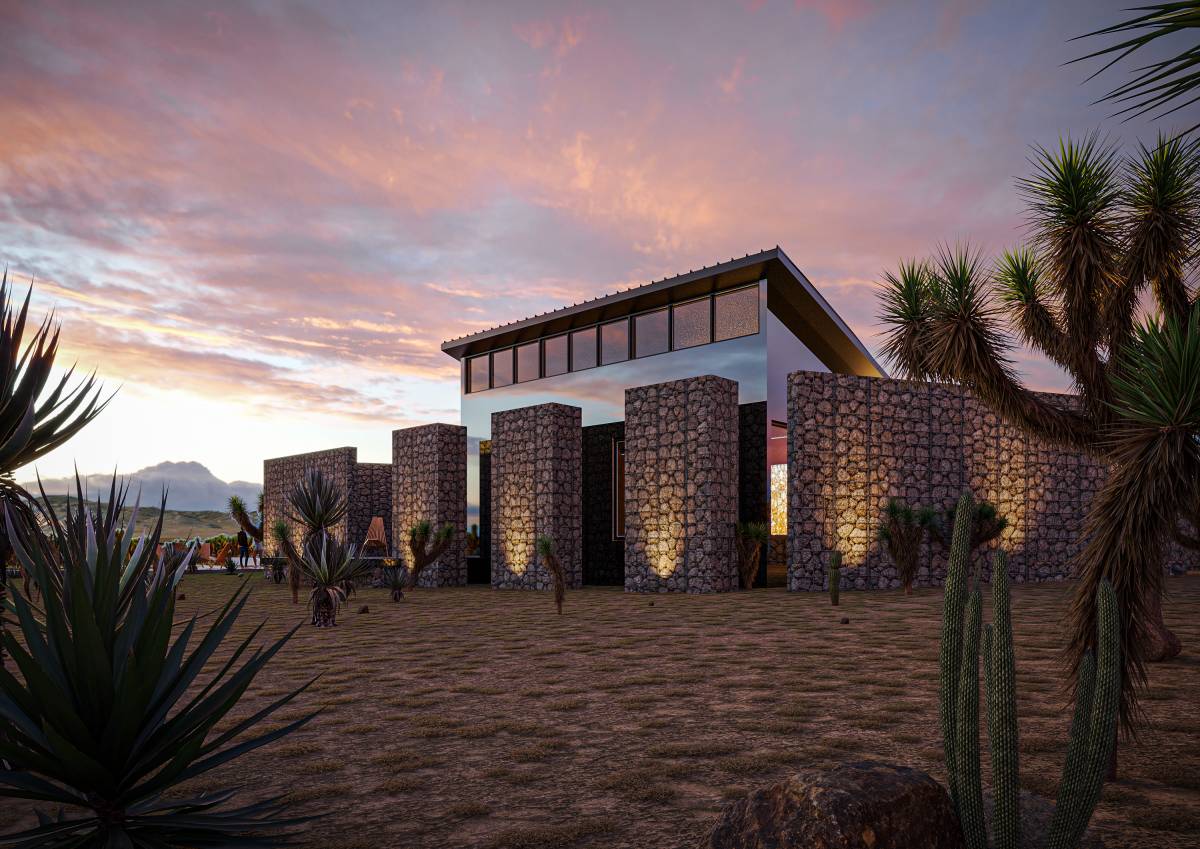
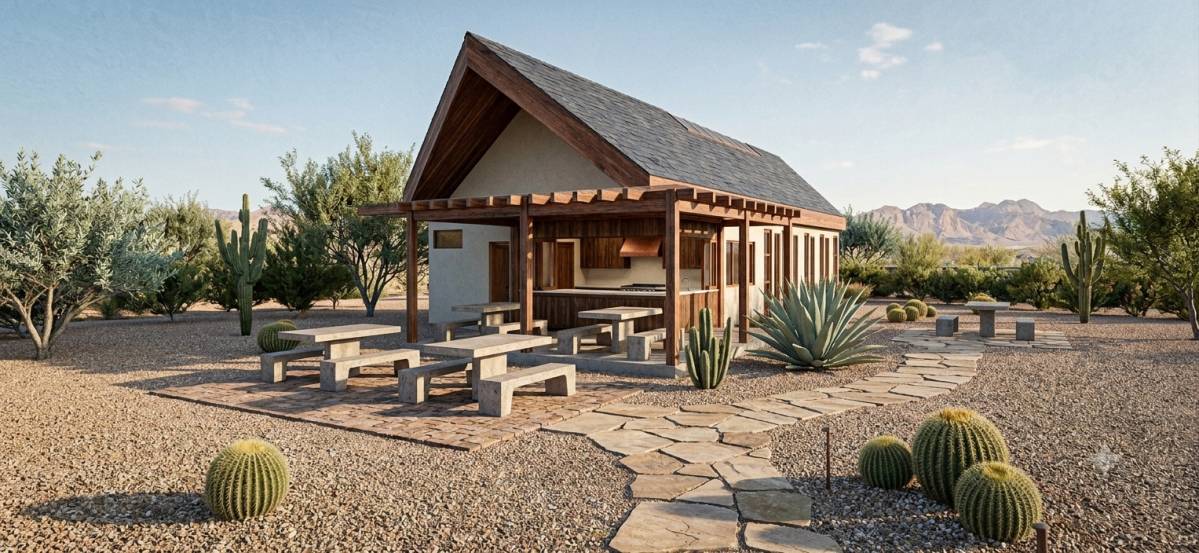
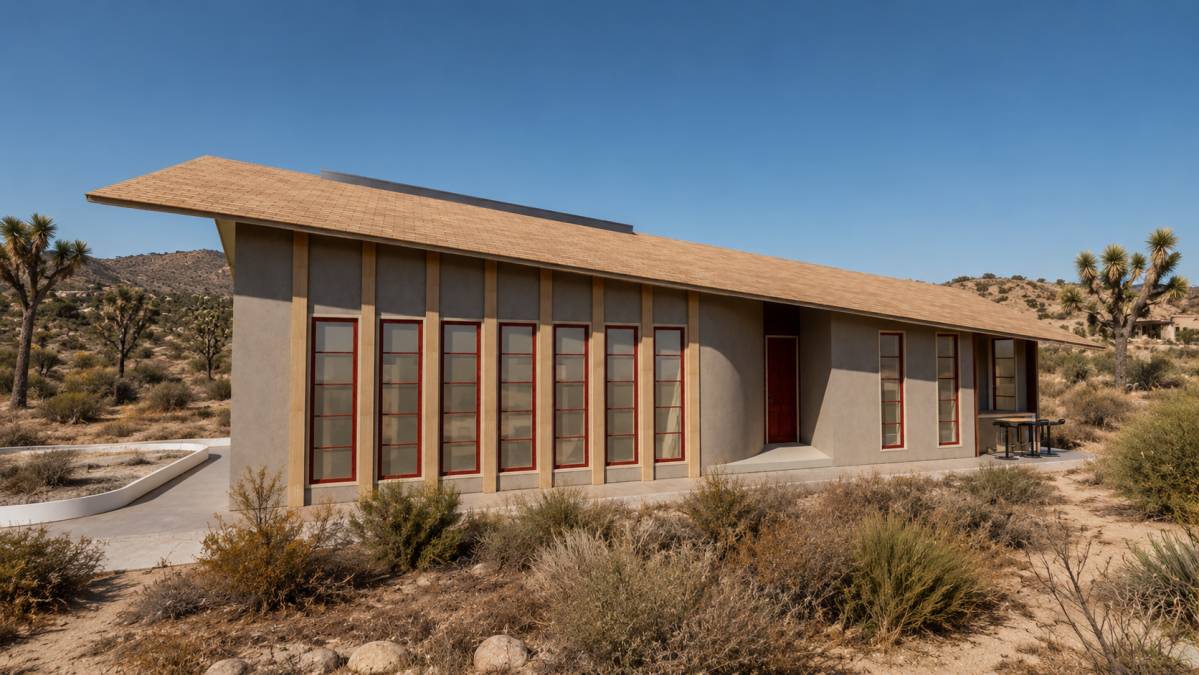
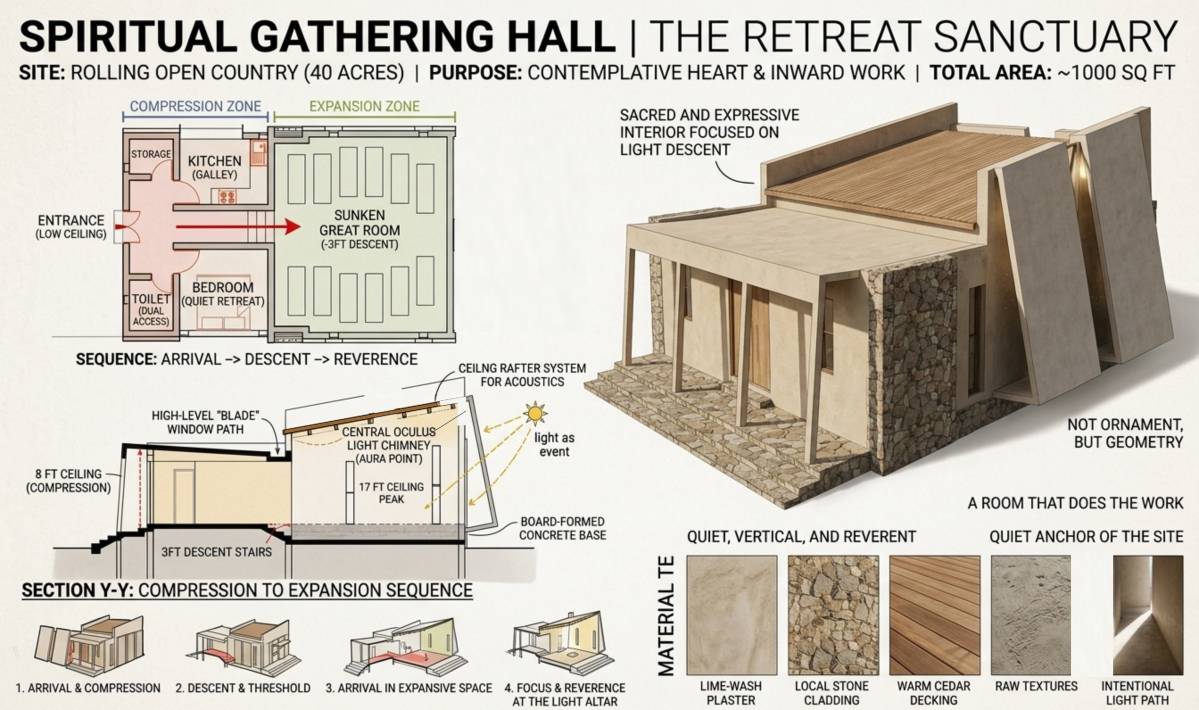
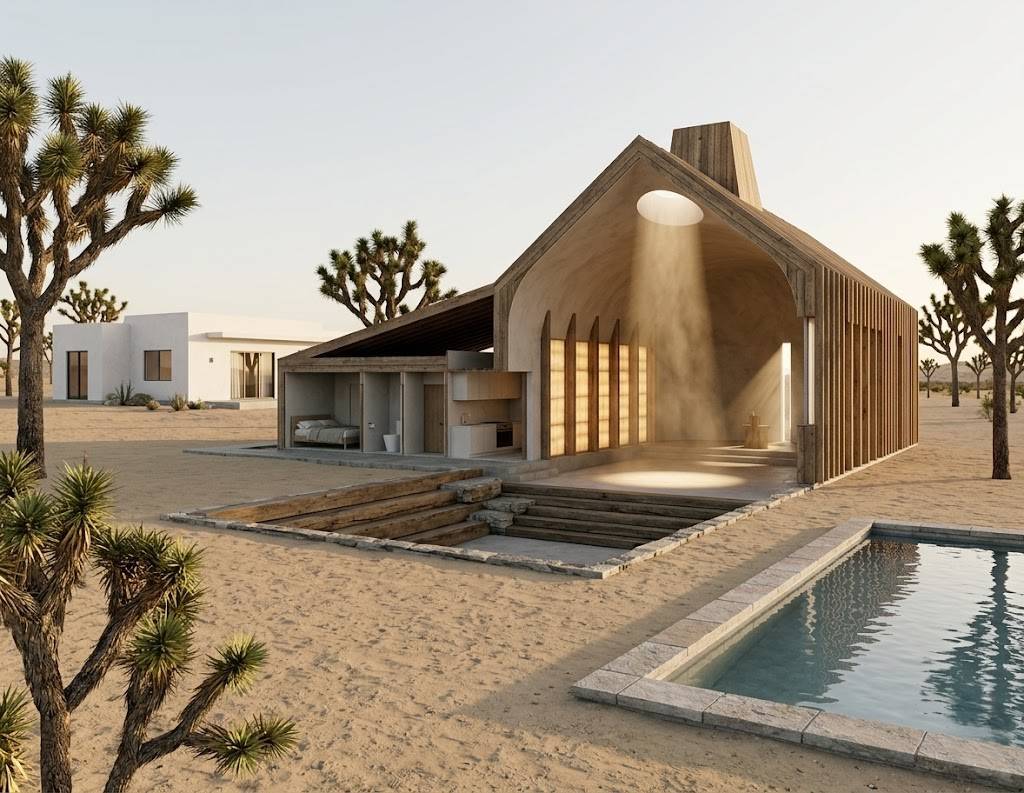
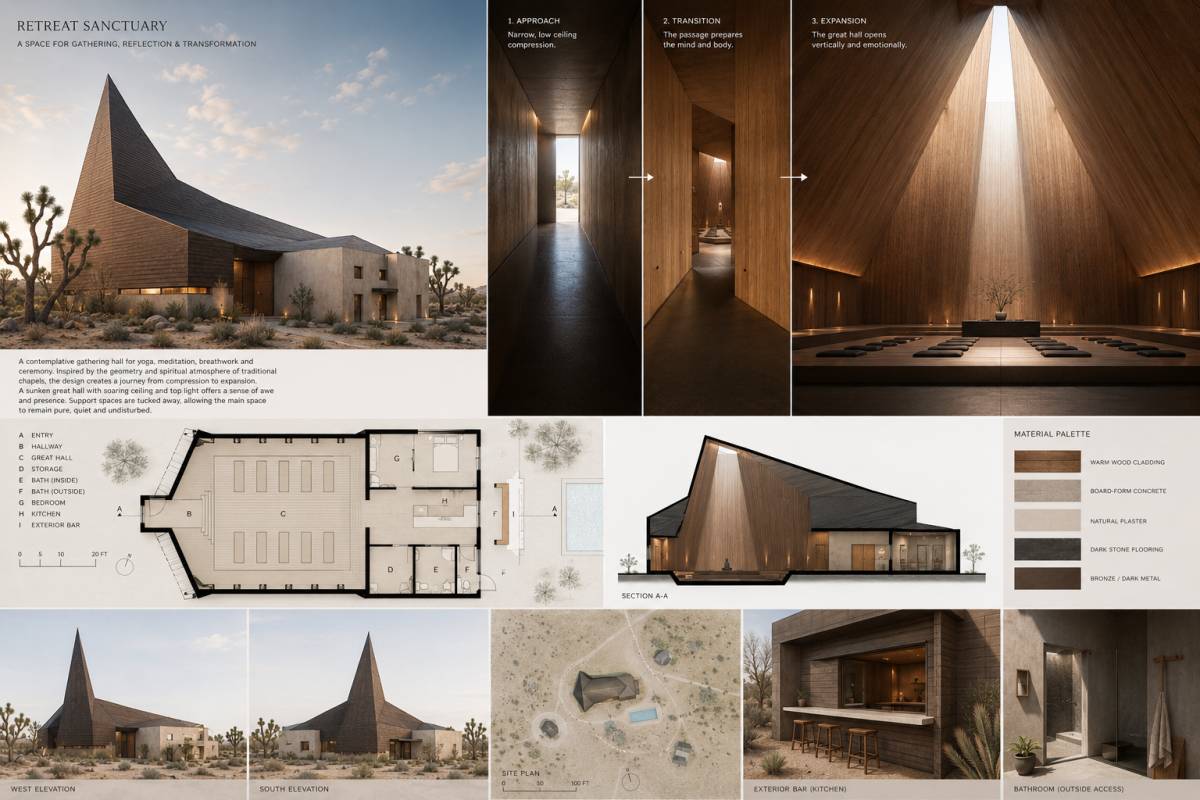
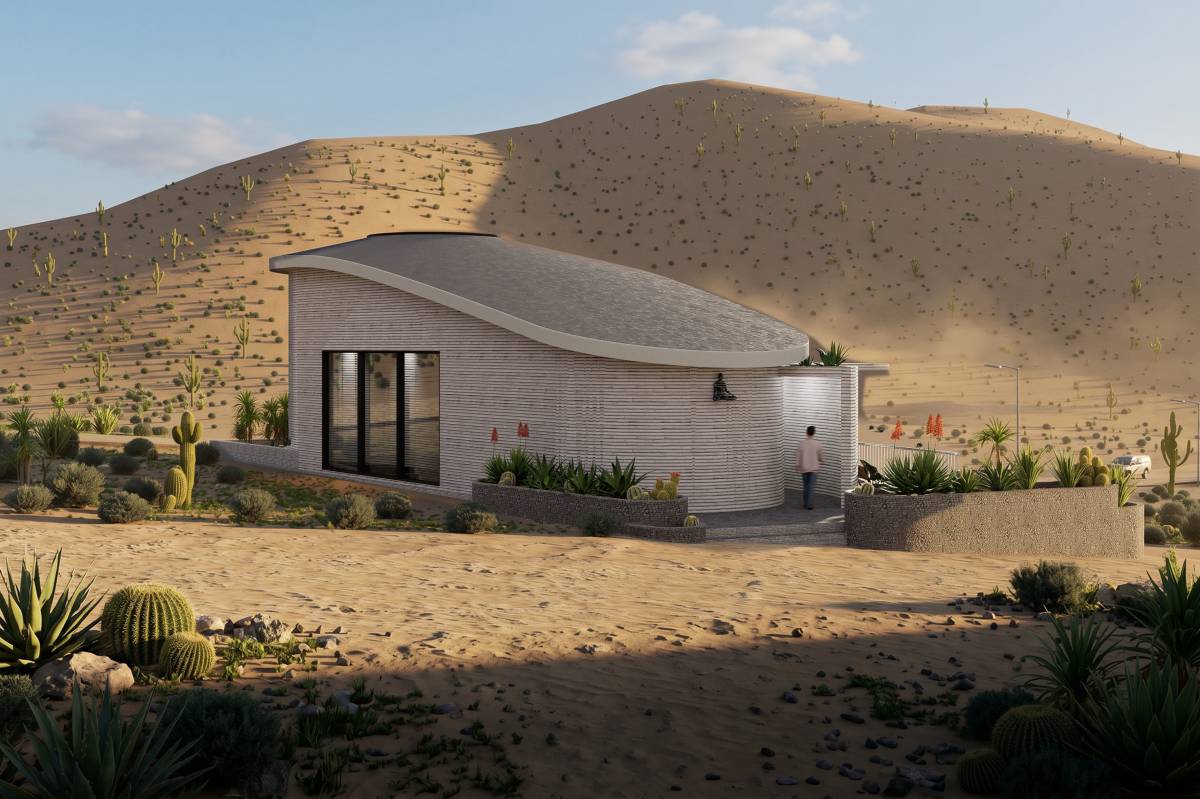
This spiritual gathering space is designed as a form of retreat architecture, where silence and tranquility become the primary spatial elements. Located within a rocky desert landscape, far removed from the noise and intensity of urban life, the project establishes a profound relationship between architecture, nature, and inner experience. Rather than dominating its surroundings, the building emerges as a calm monolithic object — a contemplative space that integrates itself with the stillness of the environment.
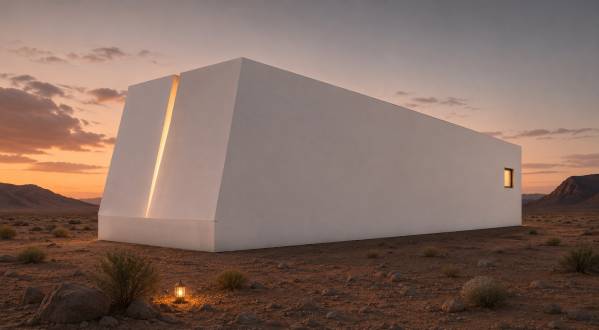
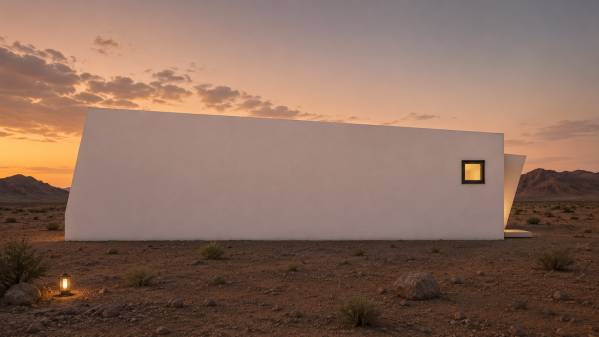
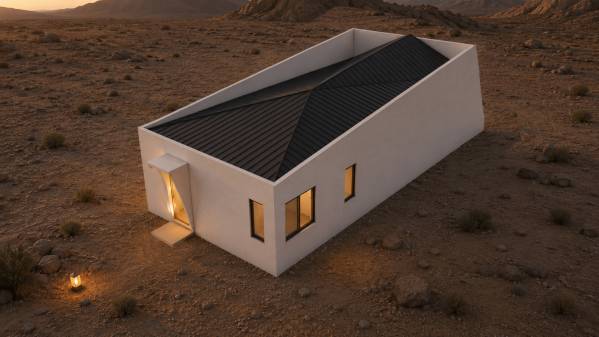
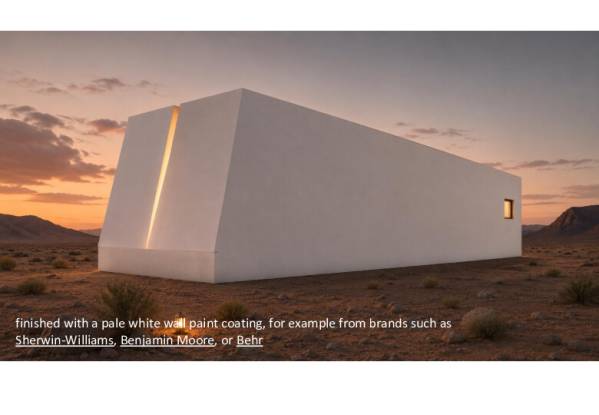
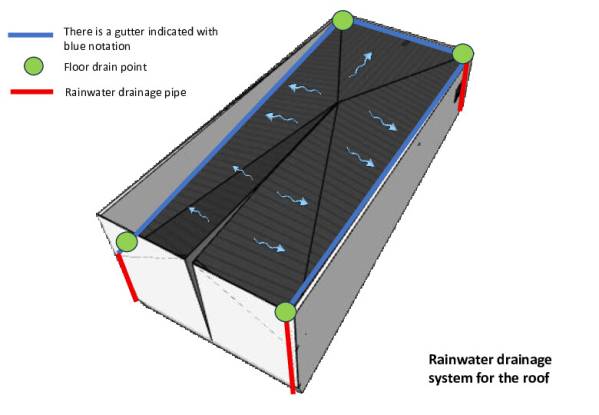
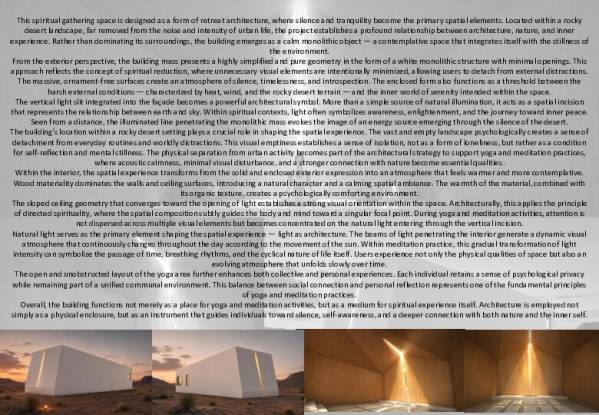
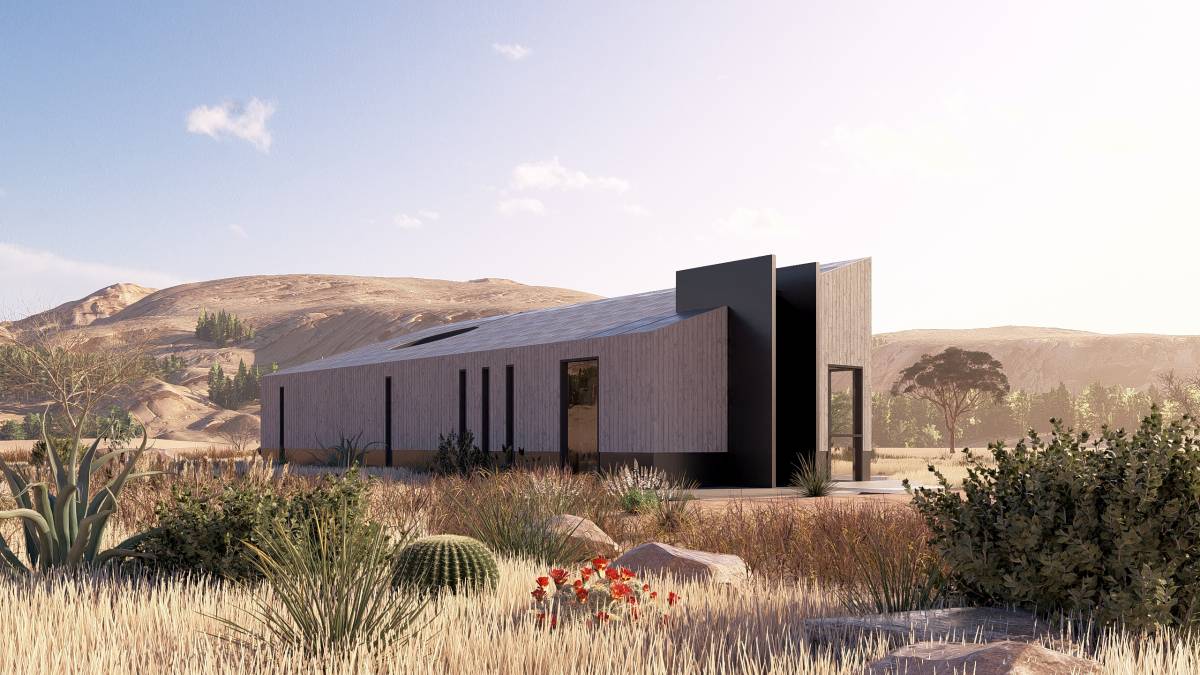
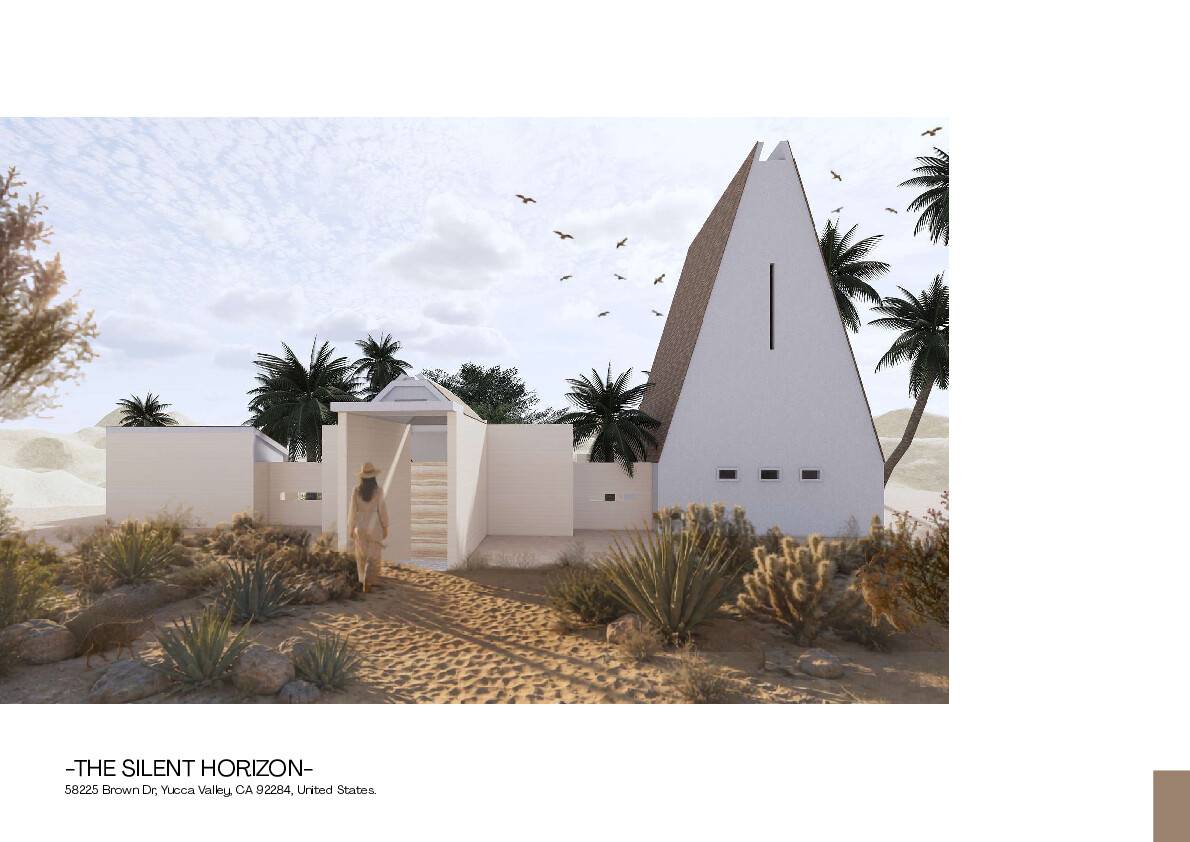
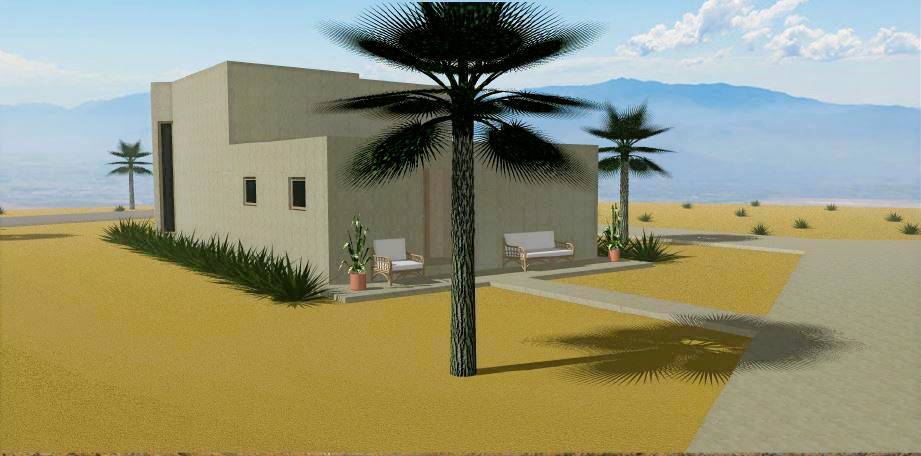
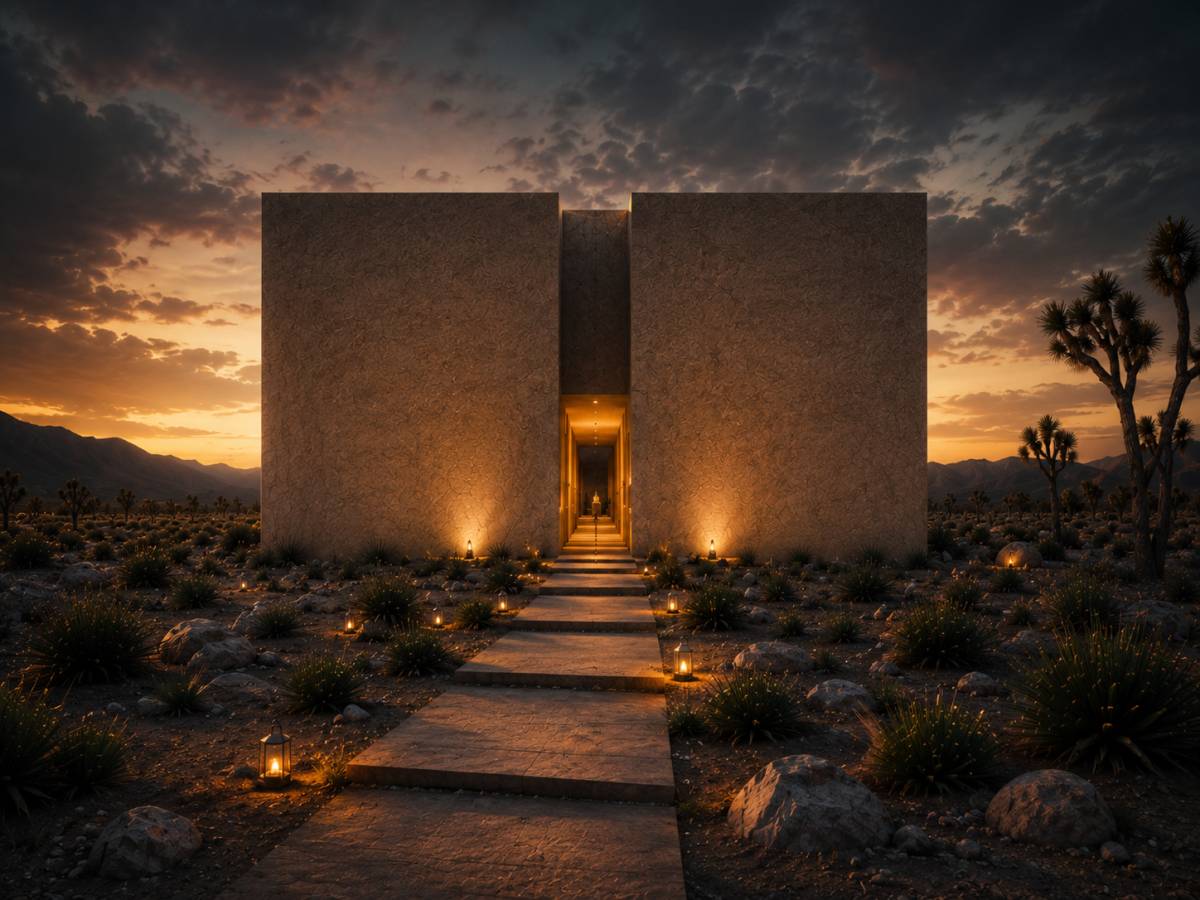
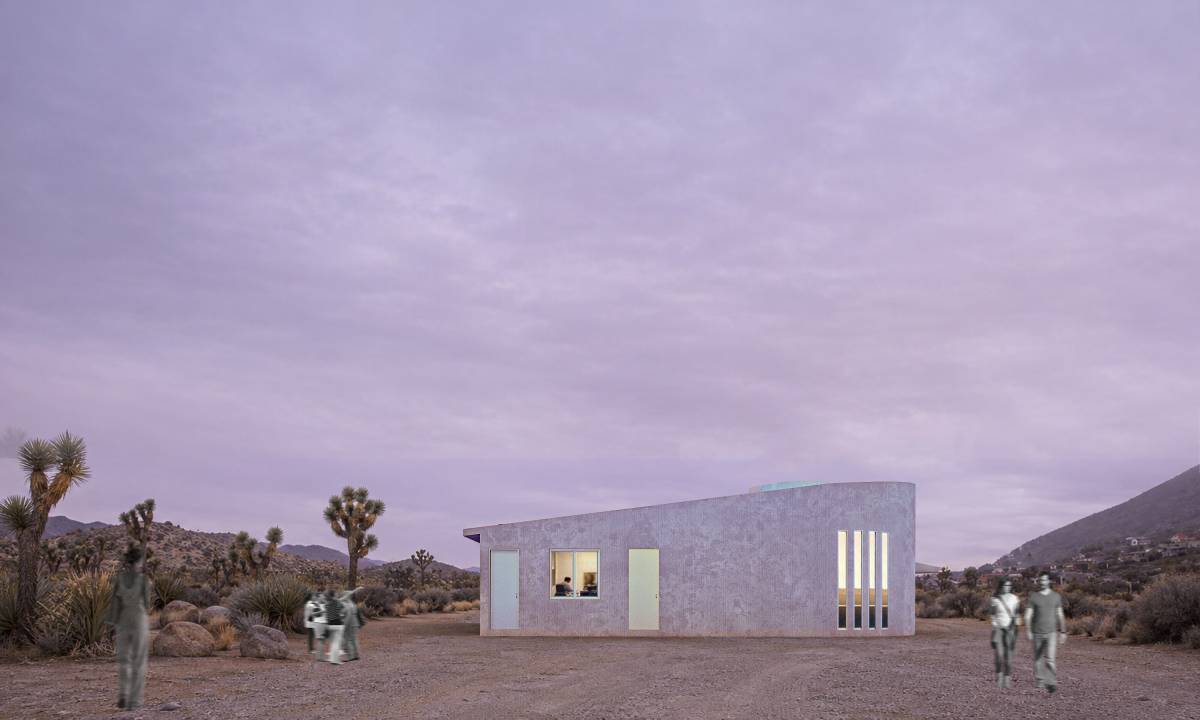
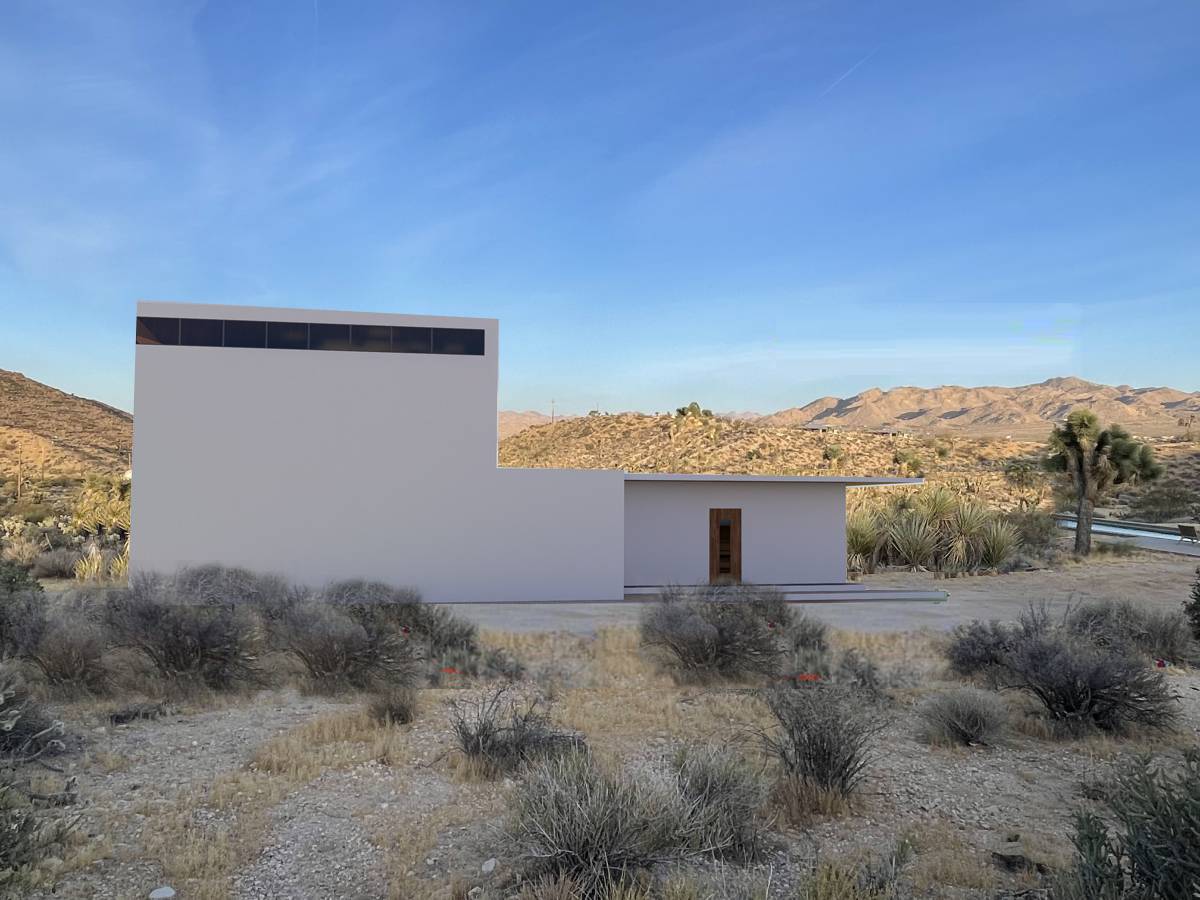
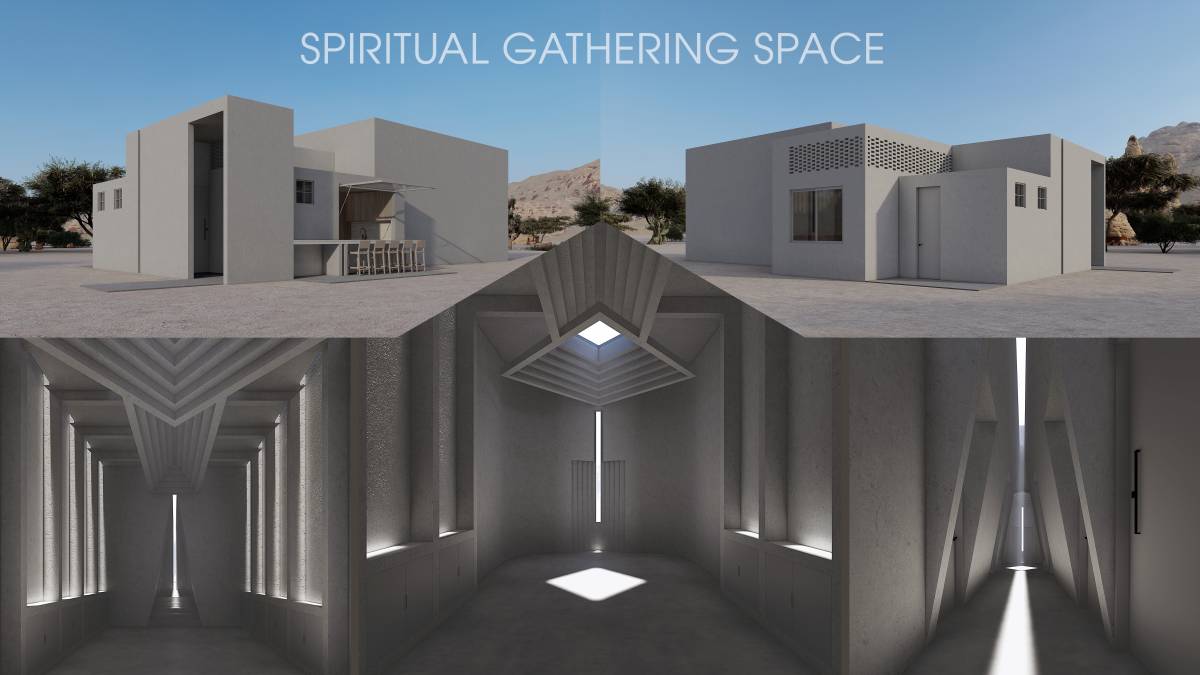
From the exterior perspective, the building mass presents a highly simplified and pure geometry in the form of a white monolithic structure with minimal openings. This approach reflects the concept of spiritual reduction, where unnecessary visual elements are intentionally minimized, allowing users to detach from external distractions. The massive, ornament-free surfaces create an atmosphere of silence, timelessness, and introspection. The enclosed form also functions as a threshold between the harsh external conditions — characterized by heat, wind, and the rocky desert terrain — and the inner world of serenity intended within the space.
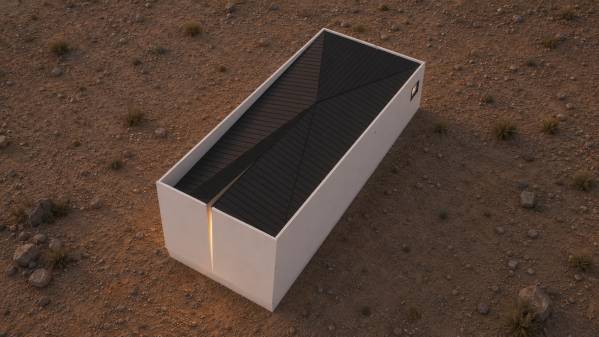
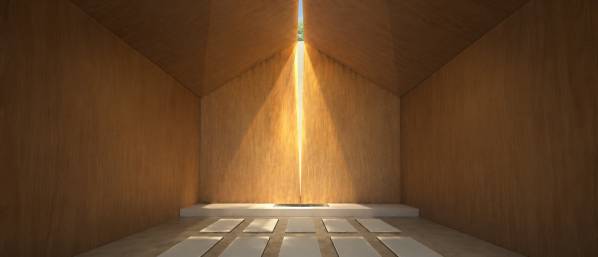
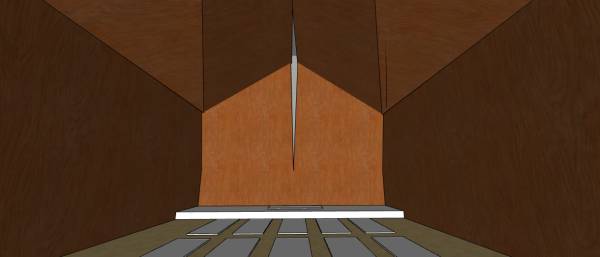
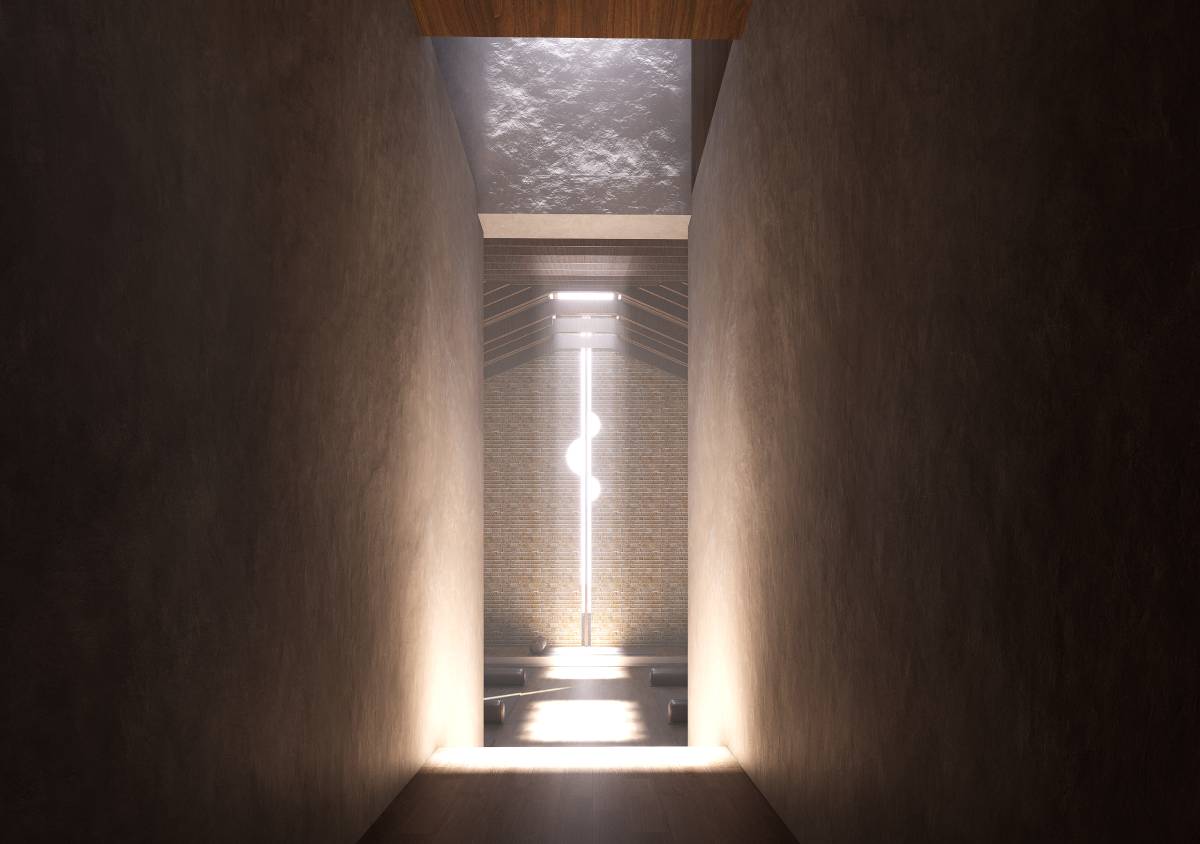
The vertical light slit integrated into the façade becomes a powerful architectural symbol. More than a simple source of natural illumination, it acts as a spatial incision that represents the relationship between earth and sky. Within spiritual contexts, light often symbolizes awareness, enlightenment, and the journey toward inner peace. Seen from a distance, the illuminated line penetrating the monolithic mass evokes the image of an energy source emerging through the silence of the desert.
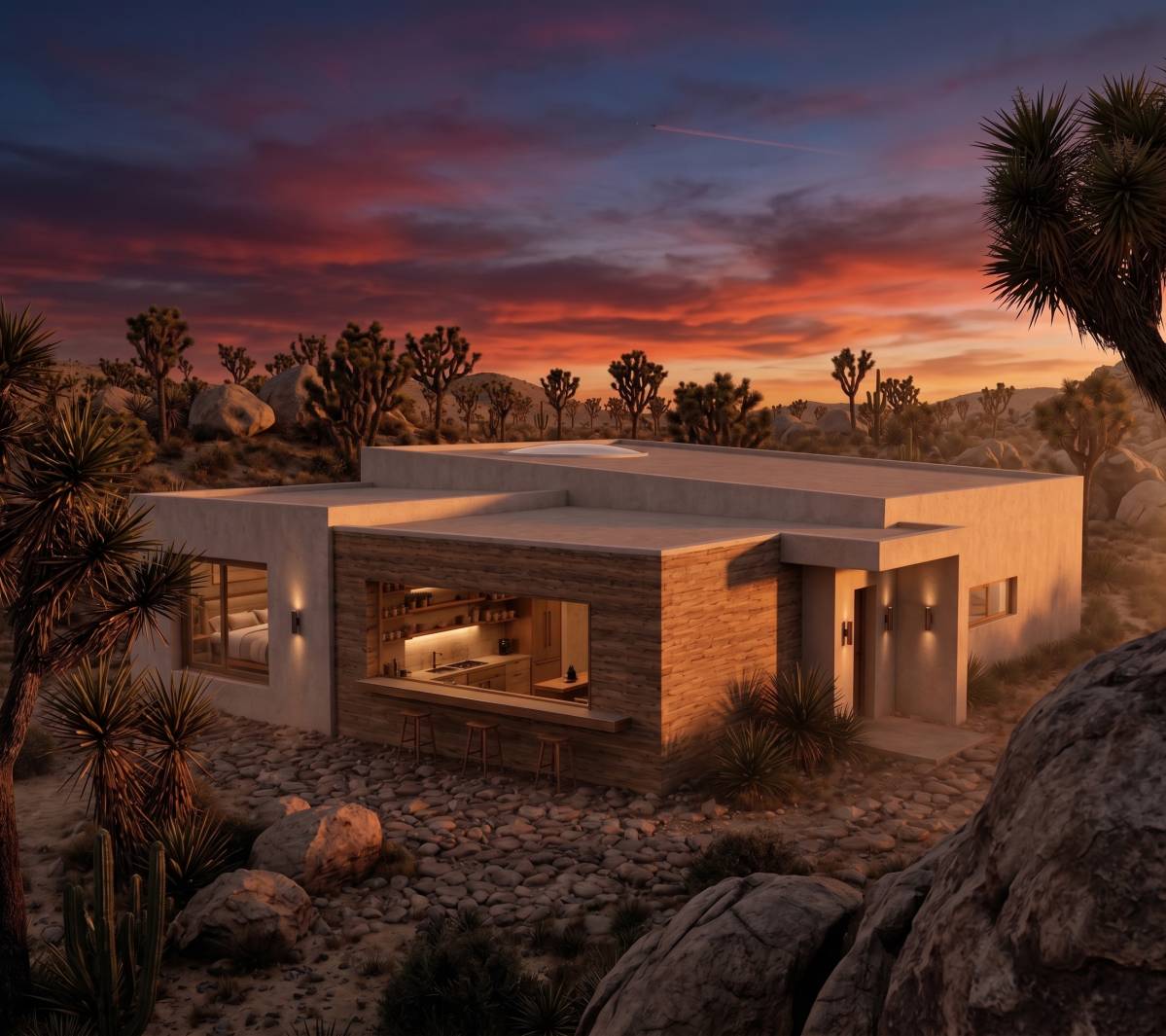
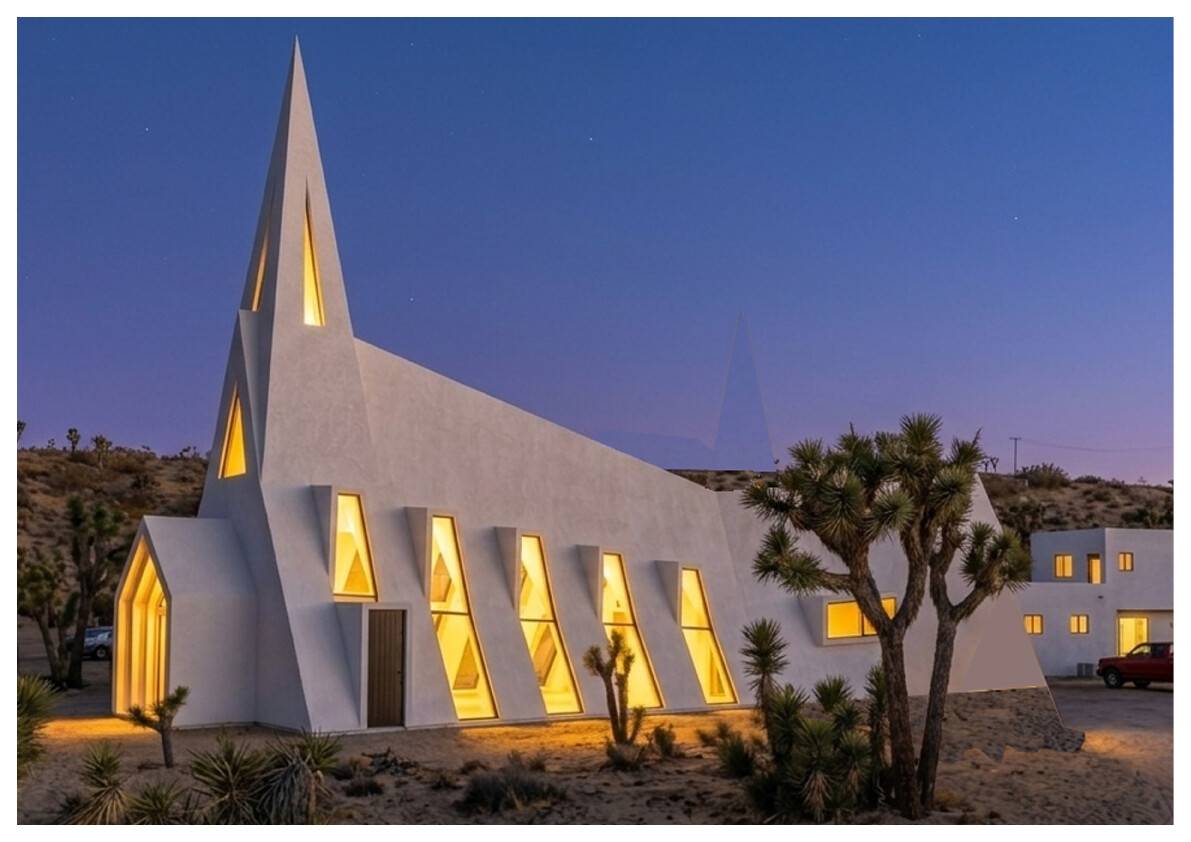
The building's location within a rocky desert setting plays a crucial role in shaping the spatial experience. The vast and empty landscape psychologically creates a sense of detachment from everyday routines and worldly distractions. This visual emptiness establishes a sense of isolation, not as a form of loneliness, but rather as a condition for self-reflection and mental stillness. The physical separation from urban activity becomes part of the architectural strategy to support yoga and meditation practices, where acoustic calmness, minimal visual disturbance, and a stronger connection with nature become essential qualities.
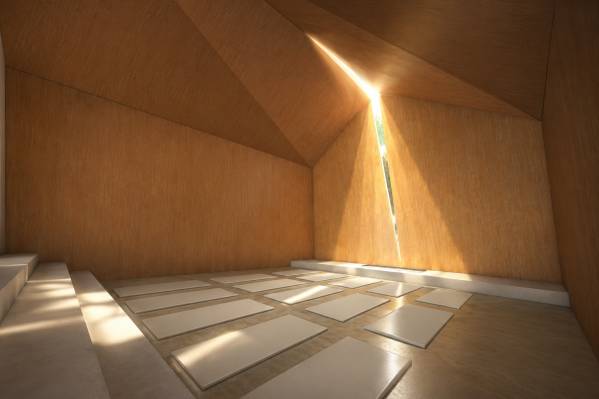
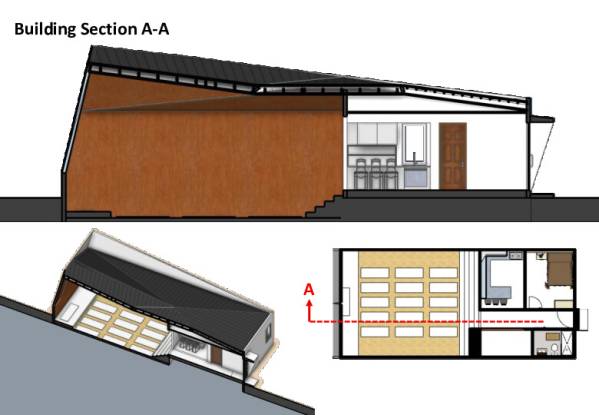
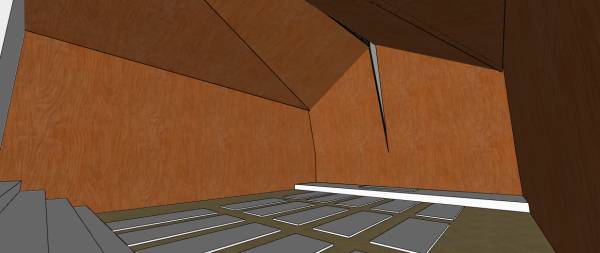
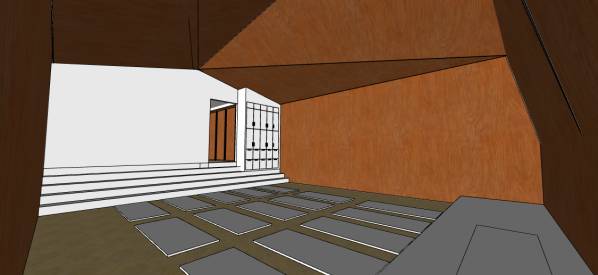
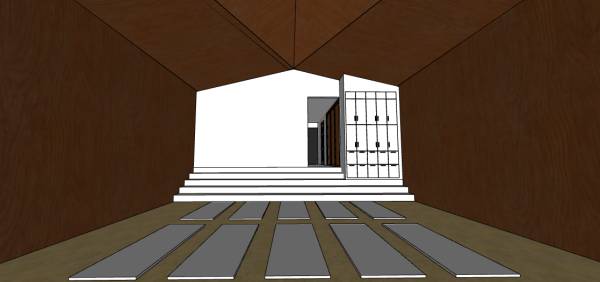
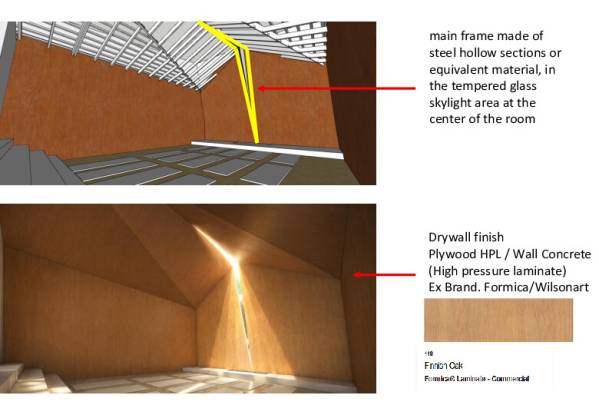
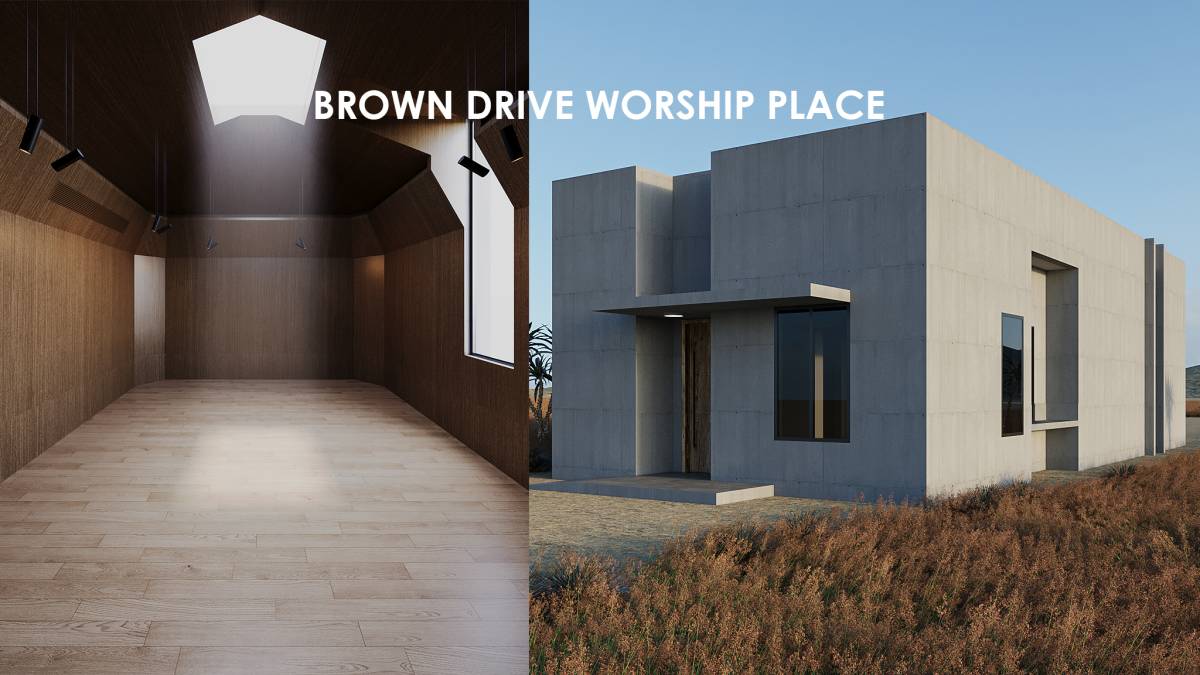
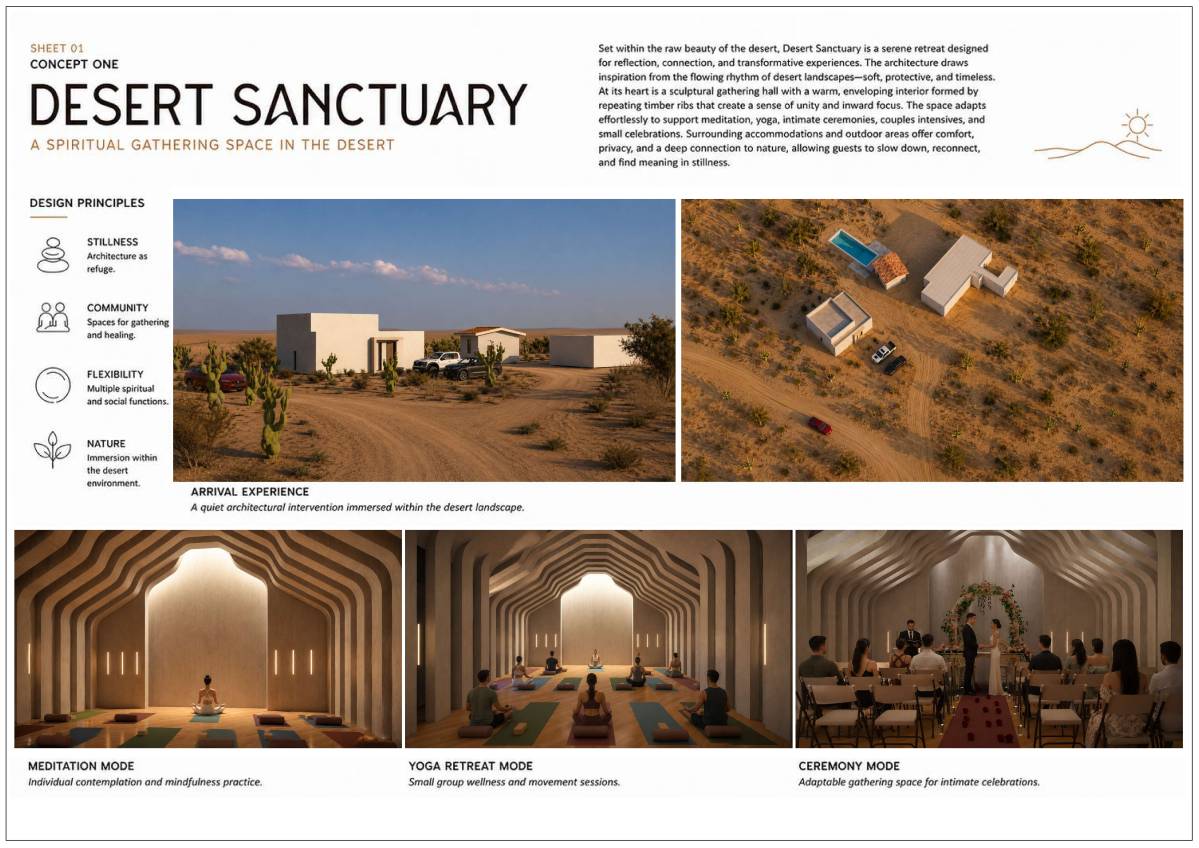
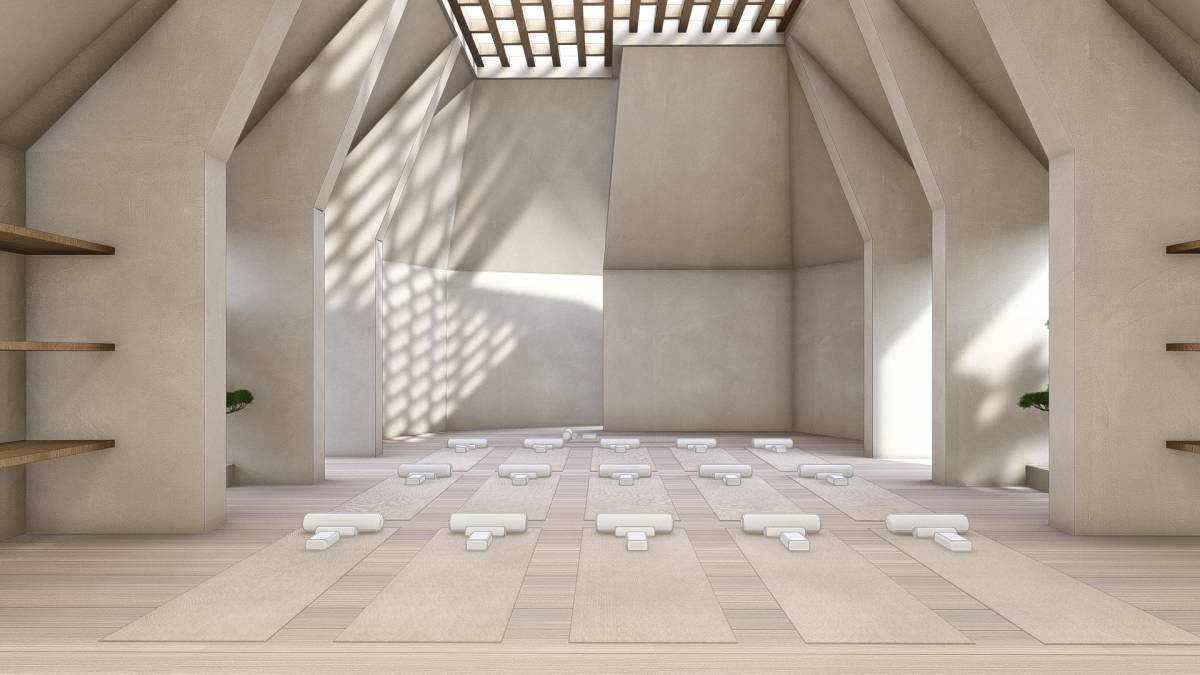
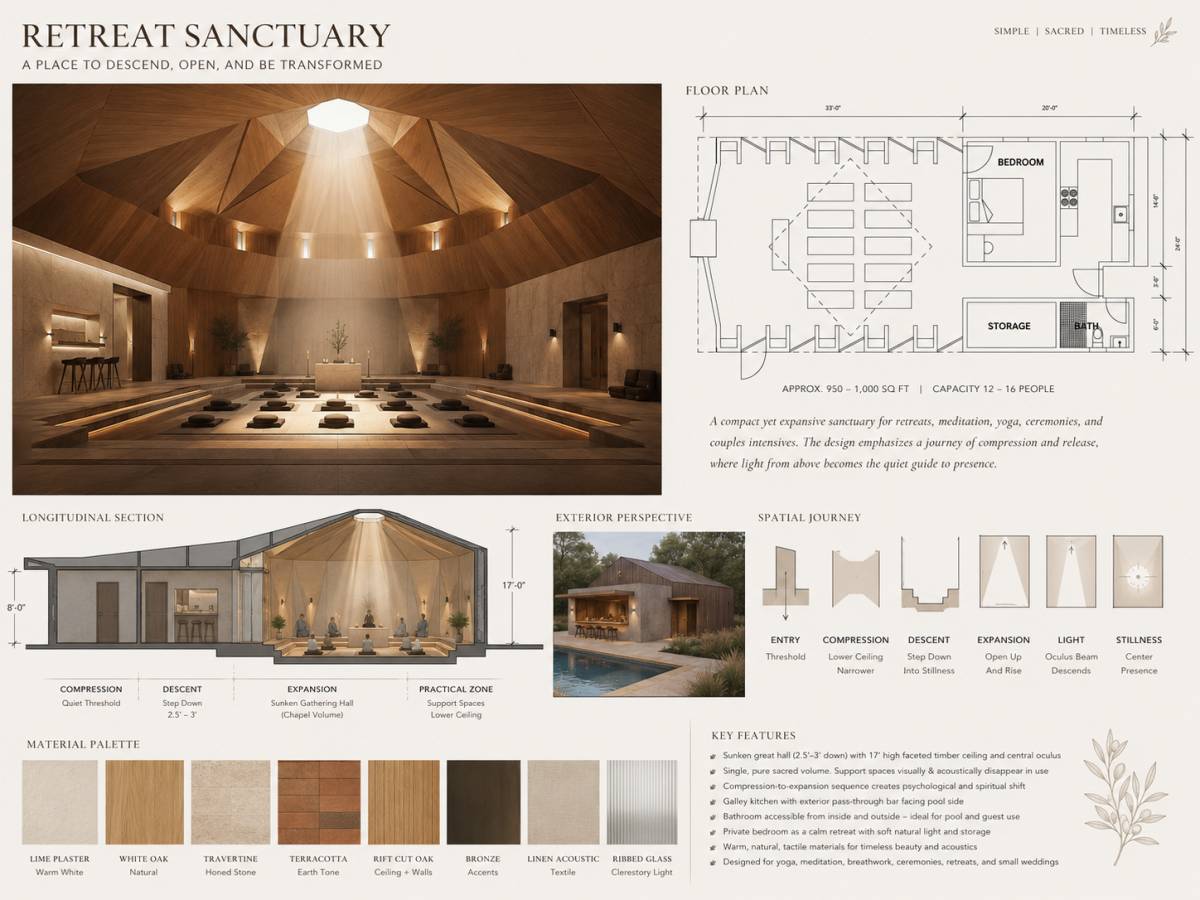
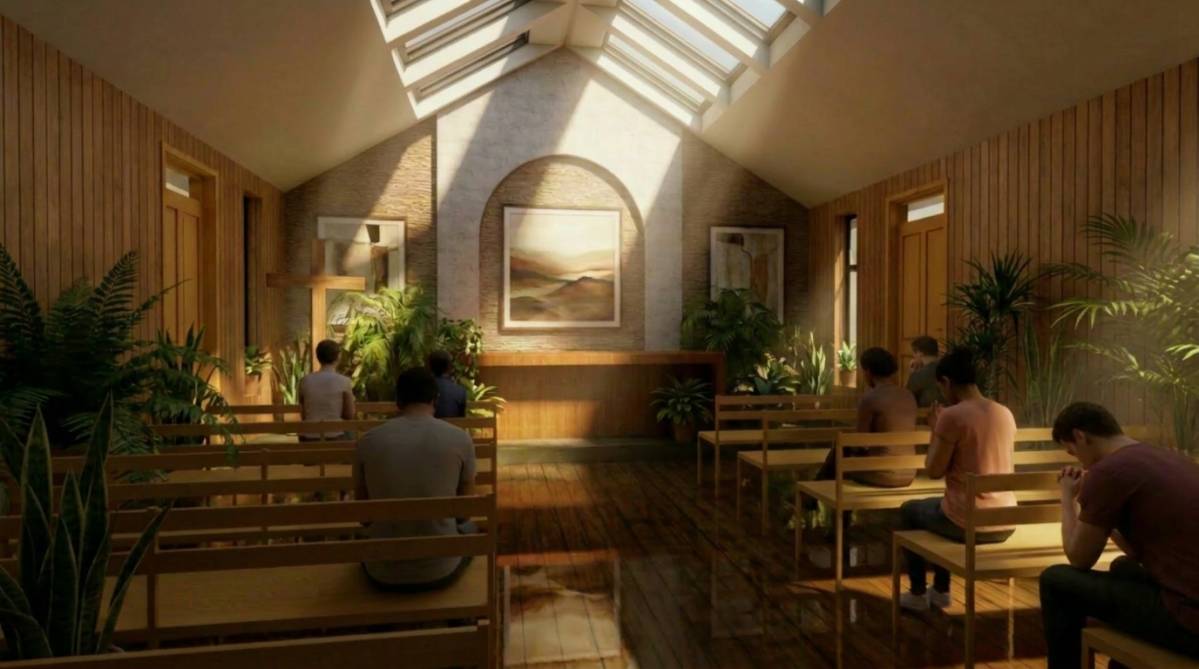
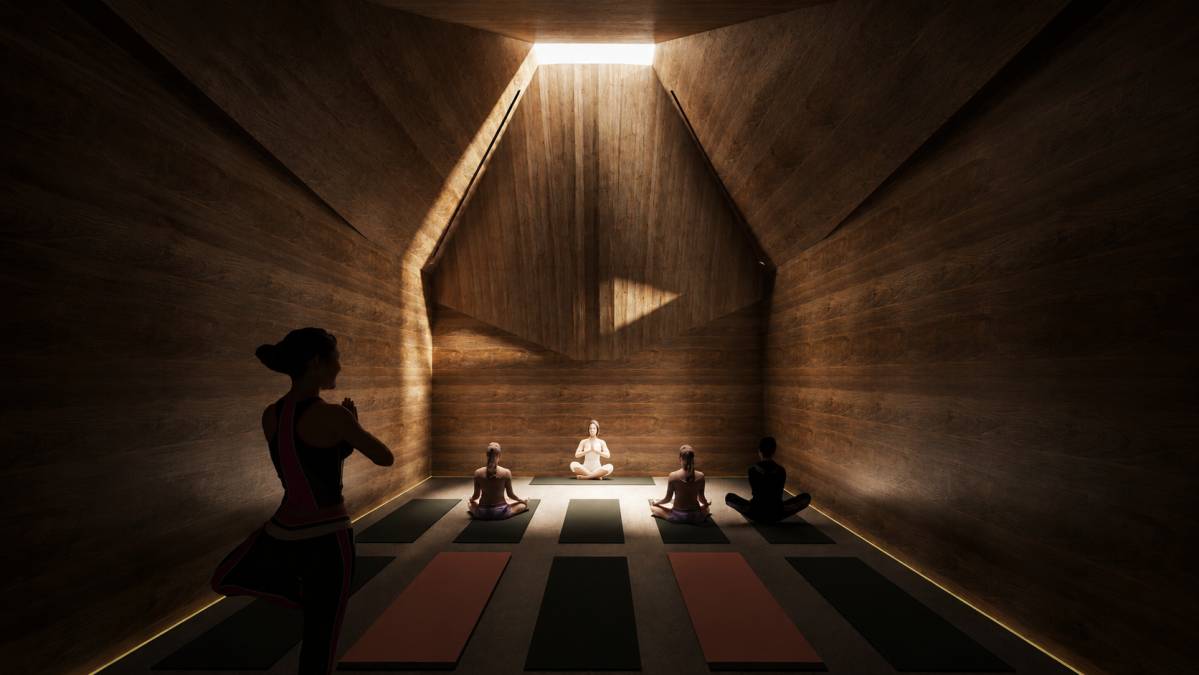
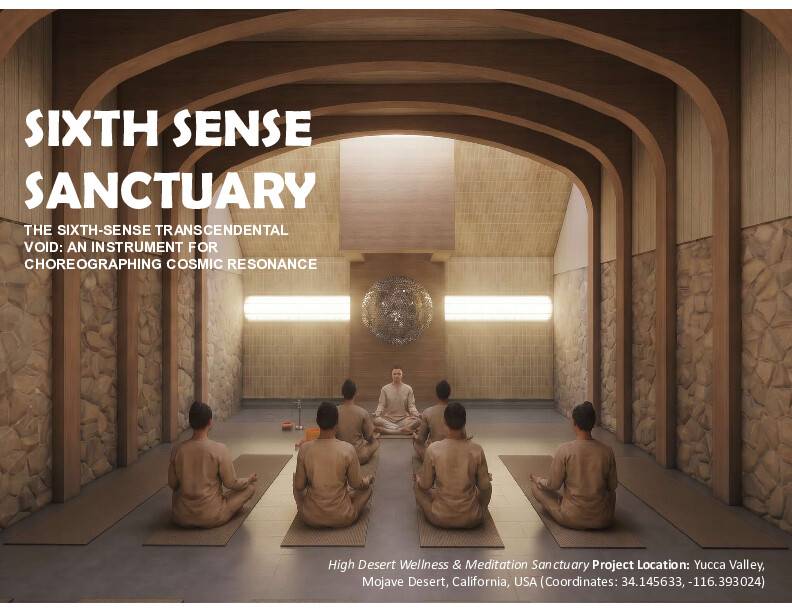
Within the interior, the spatial experience transforms from the solid and enclosed exterior expression into an atmosphere that feels warmer and more contemplative. Wood materiality dominates the walls and ceiling surfaces, introducing a natural character and a calming spatial ambiance. The warmth of the material, combined with its organic texture, creates a psychologically comforting environment.
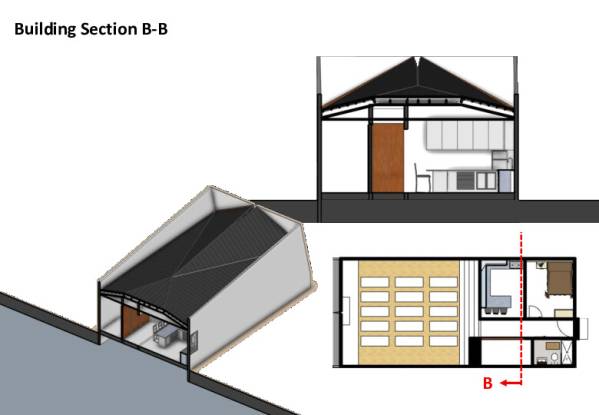
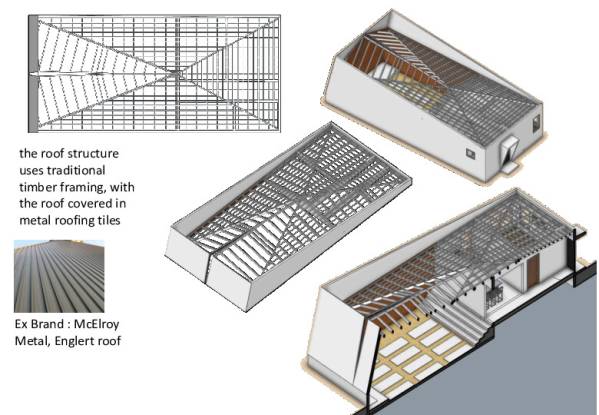
The sloped ceiling geometry that converges toward the opening of light establishes a strong visual orientation within the space. Architecturally, this applies the principle of directed spirituality, where the spatial composition subtly guides the body and mind toward a singular focal point. During yoga and meditation activities, attention is not dispersed across multiple visual elements but becomes concentrated on the natural light entering through the vertical incision.
Natural light serves as the primary element shaping the spatial experience — light as architecture. The beams of light penetrating the interior generate a dynamic visual atmosphere that continuously changes throughout the day according to the movement of the sun. Within meditation practice, this gradual transformation of light intensity can symbolize the passage of time, breathing rhythms, and the cyclical nature of life itself. Users experience not only the physical qualities of space but also an evolving atmosphere that unfolds slowly over time.
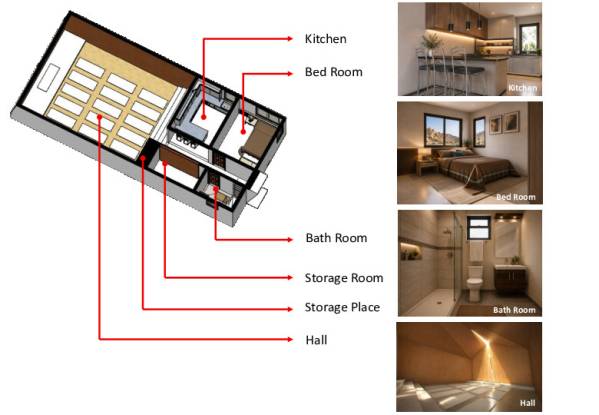
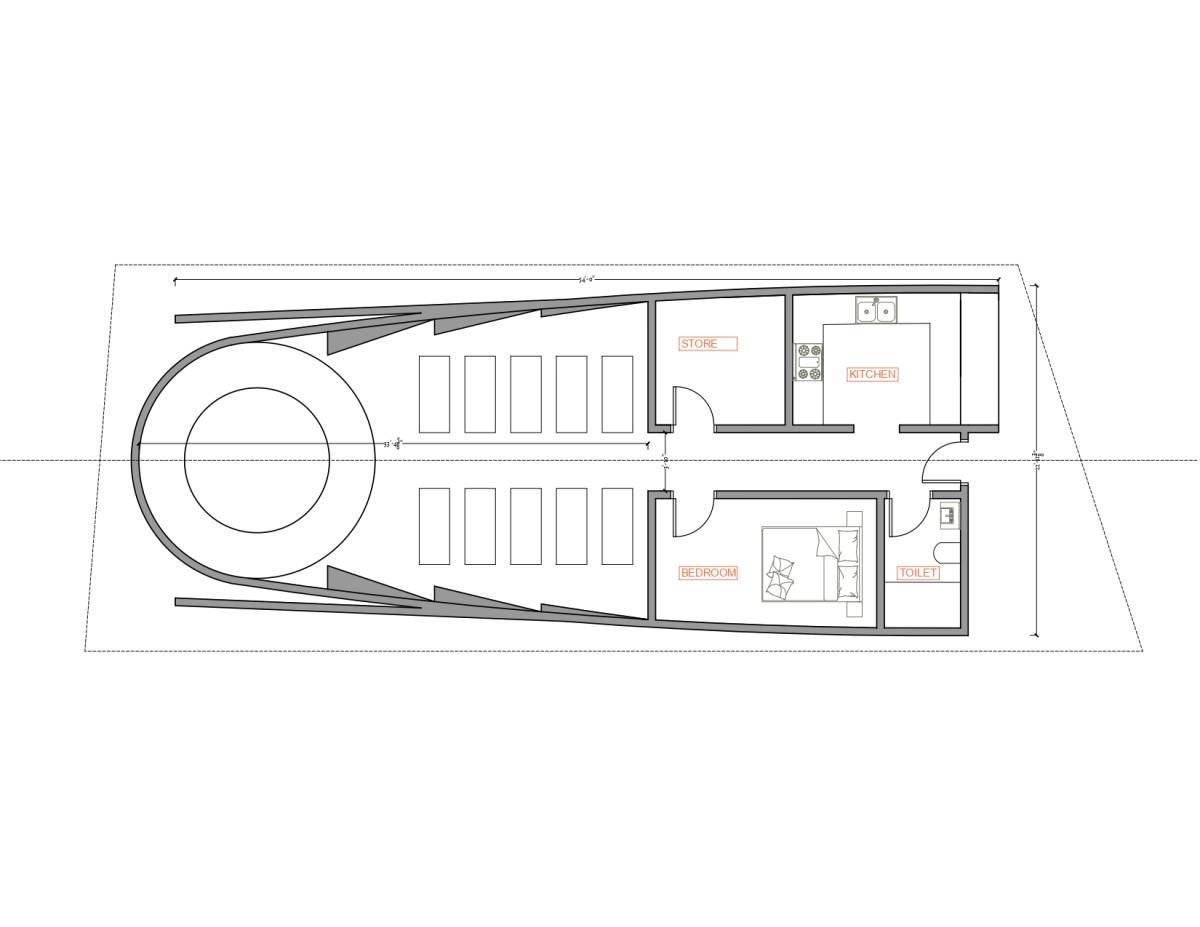
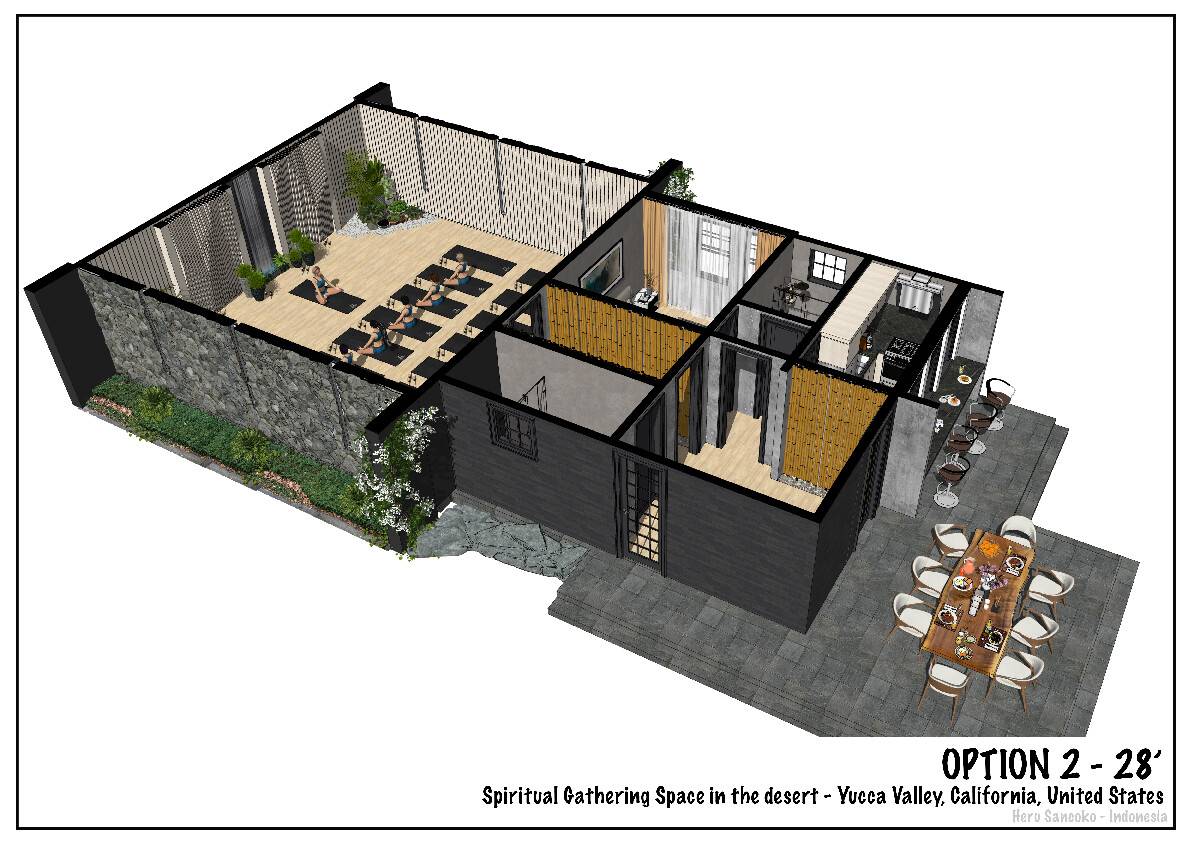
The open and unobstructed layout of the yoga area further enhances both collective and personal experiences. Each individual retains a sense of psychological privacy while remaining part of a unified communal environment. This balance between social connection and personal reflection represents one of the fundamental principles of yoga and meditation practices.
Overall, the building functions not merely as a place for yoga and meditation activities, but as a medium for spiritual experience itself. Architecture is employed not simply as a physical enclosure, but as an instrument that guides individuals toward silence, self-awareness, and a deeper connection with both nature and the inner self.